Parkersburg W.V. 26101
E-mail us: [email protected]
MONDAY-FRIDAY 7AM - 4PM EMERGENSIES BASED ON AVAILABILITY

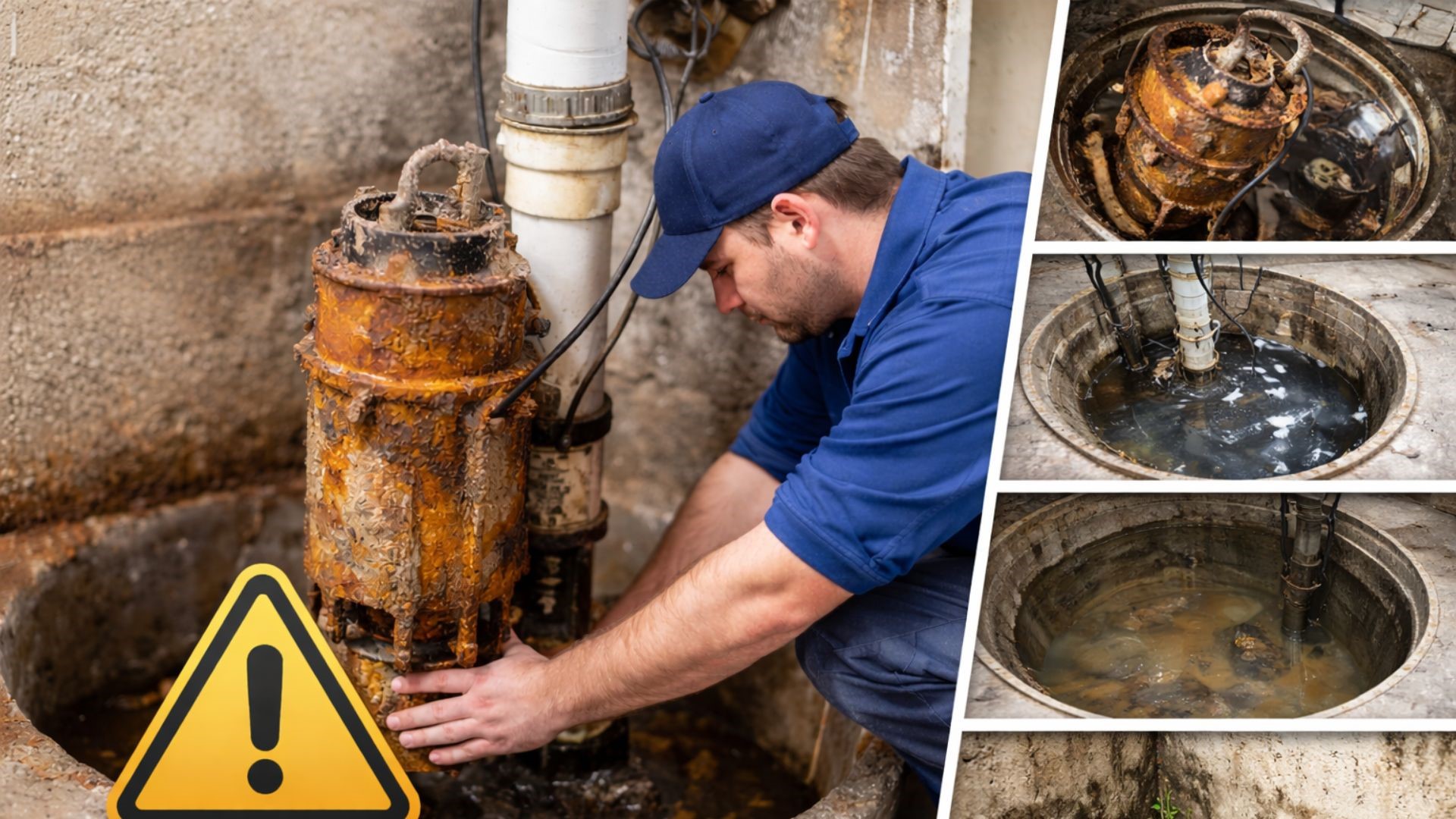
When was the last time you looked at your sump pump? Yeah…. thought so. No one thinks about it until the basement floods. Between snow melting in spring and the rainy season. That little pump in your basement is basically keeping your home dry. Yeah, it’s assuring to think that they usually last 7-10 years, but waiting until they deteriorate is a gamble you don’t wanna take. Timely sump pump replacement is essential because when it goes….it really goes. It might happen during the worst possible storm, and then you’ll be left with a flooded basement.
During one significant storm incident, municipal officials reported that 150 properties experienced flooding, specifically due to sump pump failure. But the good thing is that it doesn’t usually happen without the warning signs. Your pump surely sends signals, and you just need to know what to look for. Recognizing these sump pump replacement signs early can save you thousands in damages, protect your home and family.
According to insurance industry data, water restoration costs average between $2000 & $10,000 for flooded basements, with severe claims reaching $10,000 to $50,000.
At C&C Wirth Contractor, we’ve helped Ohio, West Virginia, & Idaho homeowners maintain their basements for decades. We have seen every type of failure, every warning sign and every consequence of neglect. The wise thing to do would be to know about the warning signs and replace them before it’s too late. Read this blog to learn clean and actionable resources to help you in this situation.
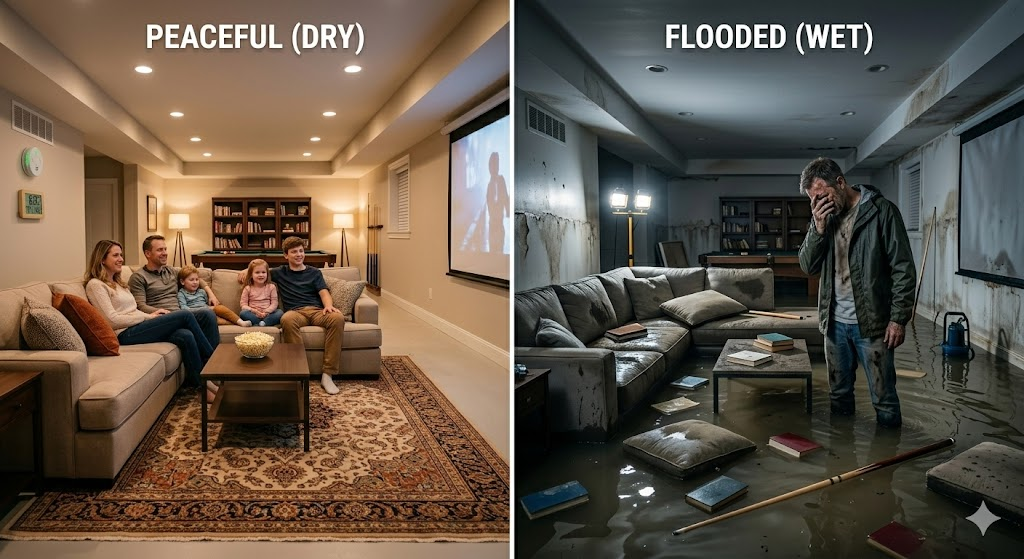
Before we get into warning signs, let’s talk about real expectations for a sec. Sump pumps don’t last forever; they just don’t, and knowing that might help you come up with a plan. According to the National Association of Home Builders, 60% of sump pump breakdowns happen because of inadequate maintenance, while another 25% because of power issues. It means tAccording to the National Association of Home Builders, 60% of sump pump breakdowns happen because of inadequate maintenance, while another 25% because of power issues. The vast majority is totally preventable.
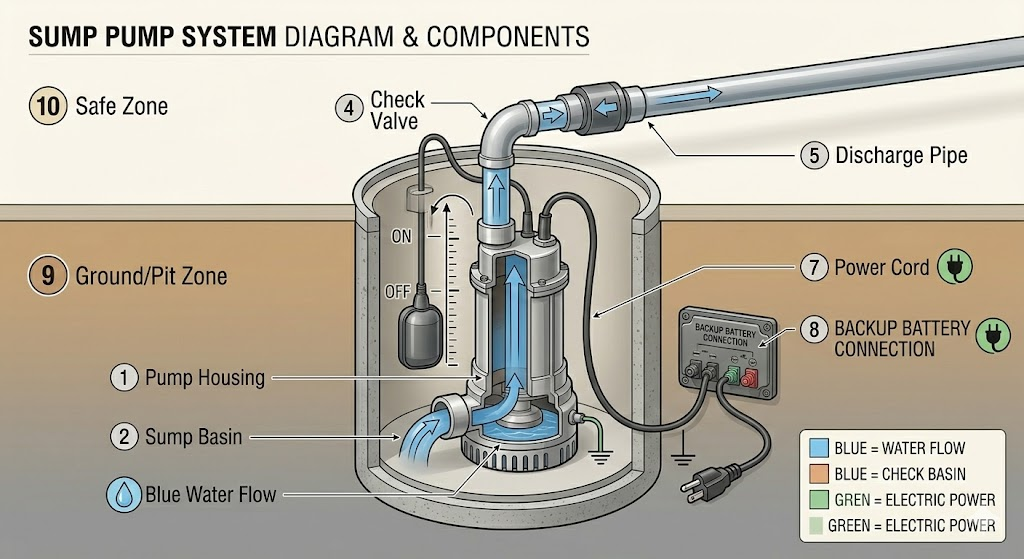
Now comes the part that nobody loves hearing: If your pump is old, please get it checked and replace it if you see any weaknesses. Industry folks say you have to do sump pump replacement every 5-7 years to maintain reasonable safety.
| Pump Type | Typical Lifespan | Best For | Key Consideration |
| Submersible Pump | 7-10 years | Homes with frequent water issues | Quieter operation, sits inside the pit |
| Pedestal Pump | 10-15 years | Homes with less frequent flooding | Motor stays dry, easier to service |
| Battery Backup Pump | 3-5 years (battery) | All homes with finished basements | Replace the battery separately from the main pump |
Your sump pump should be able to operate with a quiet hum, barely noticeable unless you’re standing directly over it. When you start hearing unusual sounds, you should seek professional help.
Listen for these specific noises:
| Noise Type | What It Indicates | Urgency Level |
| Grinding or rattling | Worn bearings or debris in impeller | close – Immediate attention |
| Loud humming with no pumping | Motor running, but impeller not turning | Critical – Impeller may be broken |
| Gurgling or bubbling | Air in the system or check valve issues | Moderate – Inspect soon |
| Clicking on/off rapidly | Float switch malfunction | High – Could fail anytime |
Sump pumps are supposed to be relatively quiet, just a gentle hum when they kick on, water moving about then it should be pretty much silent. So when you start hearing grinding or rattling, probably something is wrong. Inside the pump, there’s a little fan-like thing called an impeller, which pushes water out of your basement. When you hear weird noises, either that the impeller is chewing on rocks or debris, or the bearings that let everything spin smoothly. Neither is a good sign.
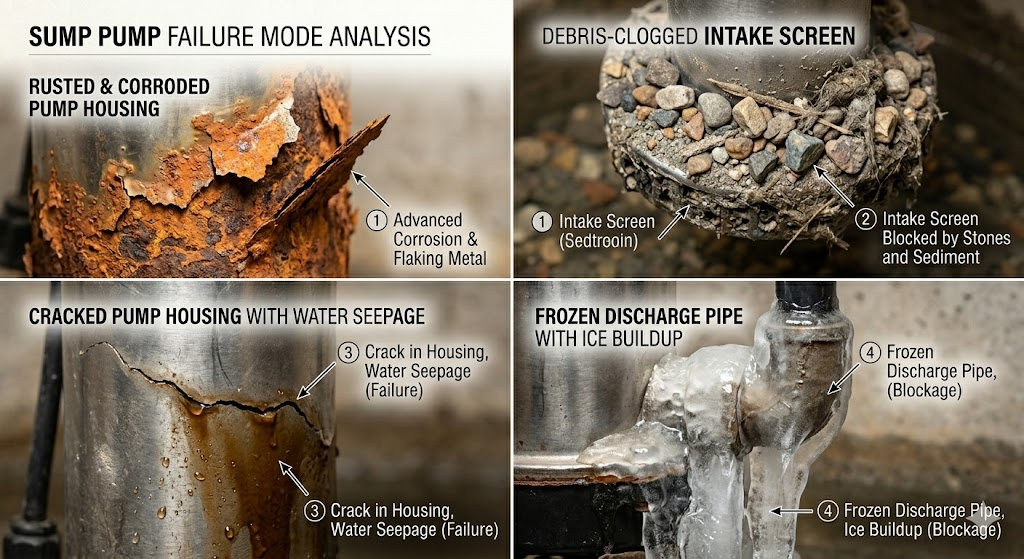
Visual Warning Signs Collage
A normal sump pump works in a rhythm: water rises, the float switch goes up, the pump kicks on, water goes down, and the pump shuts off. Simple as that. But when this cycle is disturbed, you’ve got a problem.
Here’s what to look for:
Float switches are the usual suspect, as the other one gets stuck on the pit walls constantly. Vertical floats are more reliable but neither works if you never check them. Look at your setup during the dry weather, lift the float manually,y and make sure it moves freely and the pump kicks on.
The sump pump goes through a lot, constant moisture, dirt, and minerals in the water. So some wear and tear does happen down there. But there’s a big difference between a little dry and “damn that thing is falling apart”.
Here’s what to look for:
| Visual Sign | What It Means | Action Required |
| Rust on the pump housing | Advanced corrosion is weakening the casing | Plan replacement soon |
| Rust on electrical connections | Safety hazard, potential for shorts | Immediate replacement |
| Cracks in housing | Structural failure imminent | Replace immediately |
| Corroded or crusted components | Mineral buildup affecting performance | Inspect and consider replacement |
| Visible leaks or moisture | Seal failure | Replace immediately |
Actually, look at your pump once in a while. If it’s looking beat up, cracked, or rusty, it’s probably a sump pump replacement warning sign.
This is the most obvious sign because performance problems directly impact your basement safety. The simplest way to check performance is to pour a five-gallon bucket of water into your sump pit. Watch what happens:
If it doesn’t turn on, then you’ve got a big problem. It could be electrical, could be a dead motor, could be a switch. If it turns on but drinks slowly or leaves water behind, something’s blocked. The intake screen might be clogged, or the impeller is jammed, or worst case scenario, your pump is just too small for the job.
Sign #5: Strange Odors or Visible Mold Growth
If your basement is dry, it should not smell musty. If there’s a smell, then probably your pump may be failing in its primary job. A musty or earthy smell indicates that moisture is present. Even if you don’t see standing water, high humidity or residual moisture in the pit can promote mold growth.
Common odors and what they mean:
| Odor Type | Likely Cause | Implication |
| Musty, earthy smell | Excess moisture, mold growth | Pump not removing water effectively |
| Burning smell | Motor overheating | Imminent motor failure |
| Rotten egg odor | Bacteria in stagnant water | Water is not being pumped out |
| Sewage smell | Potential backflow or contamination | Check valve failure is possible |
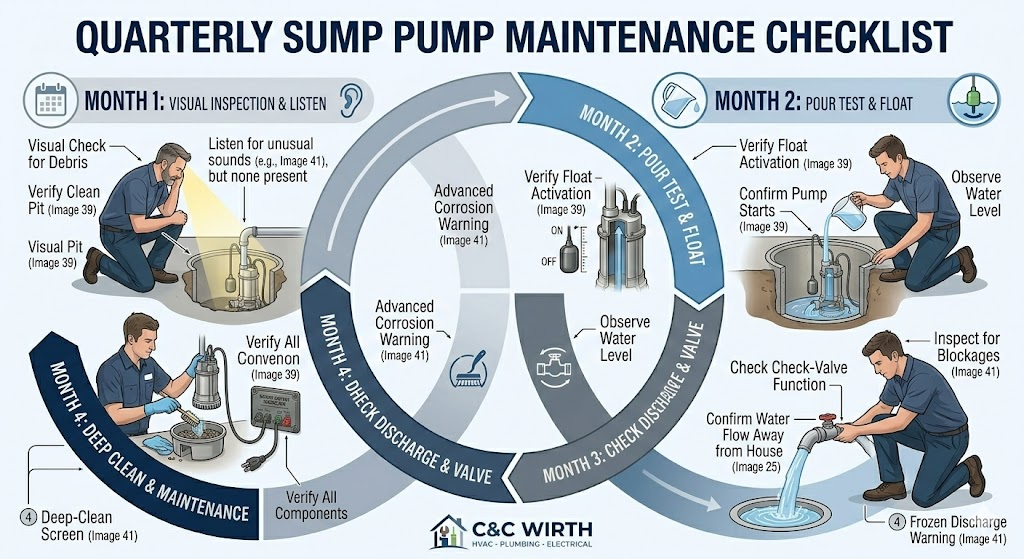
Sump Pump Maintenance Checklist Graphic
Some homeowners successfully replace their own sump pump. Others should absolutely call a professional.
Call C&C Wirth Contractors if:
Listen to this checklist regularly:
✓ Listen for strange noises
✓ Watch for irregular cycling
✓ Inspect for visible rust and damage
✓ Test performance with the pour test
✓ Notice any musty odors
Contact us today for a plumbing evaluation for your homes and businesses. Let us help you sleep soundly during the next storm, knowing your basement is protected by a plumbing system you can trust.
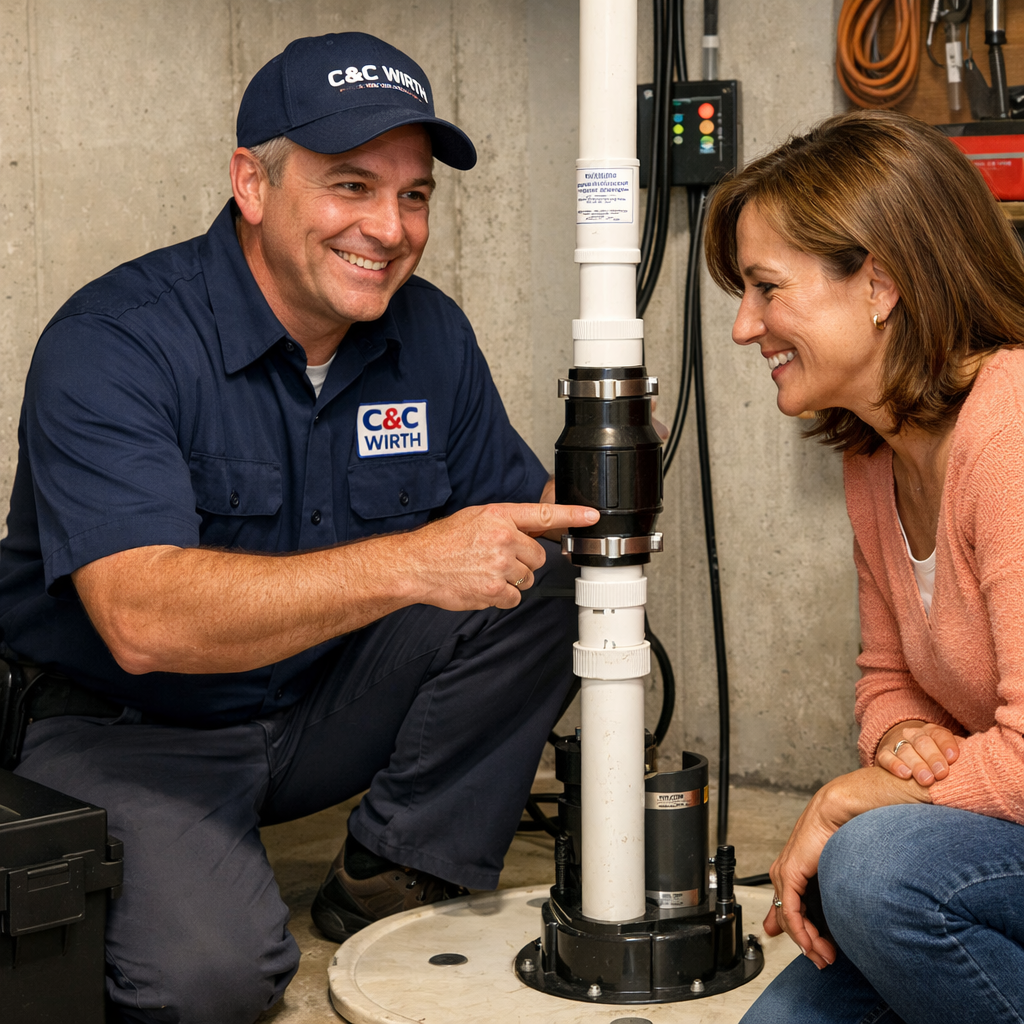
A: Industry experts recommend replacing submersible sump pumps every 7-10 years, while pedestal sump pumps should be replaced every 10-15 years. However, experts recommend replacing it every five to seven years for safety purposes. If your sump pump is about seven years old, it is time for you to start planning for a new one.
A: Although it is technically possible for a pedestal sump pump to last for 15 years if it is well maintained, it is not safe for any sump pump to last for 20 years. Although it is still operational after two decades of use, it is no longer efficient. Its components have also corroded and can fail at any time when it is operational.
A: Float switch failure is the most common reason why sump pumps fail. Tethered floats get stuck on the walls of the sump pit, while mechanical pressure switches also fail. Power failures cause about 25% of all failures, while lack of maintenance is responsible for about 60% of failures.
A: Yes, a submersible sump pump is better than a pedestal sump pump. This is because it is quieter, more powerful, and suitable for frequent use. Although a pedestal sump pump lasts longer than a submersible sump pump, it is noisier. In Ohio, where many people have finished basements and a lot of water table issues, a submersible sump pump is better than a pedestal sump pump despite its shorter lifespan.
A: Yes, you should consider a battery backup sump pump even if you own a generator. A battery backup provides uninterrupted protection during critical time while generators require manual start and fuel availability.