85 Mansion Blvd Parkersburg, WV 26101
E-mail us: [email protected]
MONDAY-FRIDAY 7AM - 4PM EMERGENSIES BASED ON AVAILABILITY

If you’ve ever stepped into your yard after a heavy rain and felt your shoes sink into soggy grass, you already know something isn’t right. Water pools near the foundation. Mud refuses to dry. Landscaping slowly washes away. And suddenly, you’re searching online for solutions, only to find yourself confused between terms like French drain, surface drain, and full drainage systems. That’s exactly where the conversation around yard drainage system vs. French drain begins. Homeowners often assume these two solutions are interchangeable, but they solve very different problems. Choosing the wrong one doesn’t just waste money; it can actually make drainage issues worse over time.
Drainage isn’t just about keeping your lawn dry. It’s about protecting your home’s structure, preventing long-term moisture damage, and ensuring rainwater moves away instead of settling where it shouldn’t.
In this guide, we’ll break everything down in simple, practical terms, no engineering jargon, no confusing diagrams, just clear explanations so you can confidently understand which solution your yard actually needs and why the difference matters more than most people realize.
Many homeowners treat standing water as a landscaping annoyance. In reality, poor drainage is often the beginning of much bigger problems. Water always follows gravity. When it cannot escape your property properly, it starts affecting everything around it. Soil becomes unstable. Grass struggles to survive. Moisture creeps toward foundations and basements. Over time, even small drainage issues can lead to expensive structural concerns.
Common consequences include:
What makes drainage tricky is that damage develops slowly. Nothing dramatic happens overnight. Instead, problems build quietly season after season until repairs become unavoidable.
Proper drainage isn’t a luxury upgrade; it’s preventive home protection. A well-designed system manages water before it becomes destructive, helping your yard recover quickly after storms while keeping your home safe beneath the surface.
A yard drainage system is a comprehensive solution designed to control and redirect water across an entire property. Think of it as a coordinated network rather than a single installation.
Instead of solving just one wet spot, a full system manages how water moves everywhere in your yard. Typical components may include:
The goal is simple: capture water where it collects and move it somewhere harmless.
These systems are especially useful for:
Imagine your yard as a roadway system for rainwater. Without planned routes, traffic jams happen, except the “traffic” is water pooling against your home.
A yard drainage system creates intentional pathways, ensuring water travels efficiently away from structures instead of lingering where damage can begin.
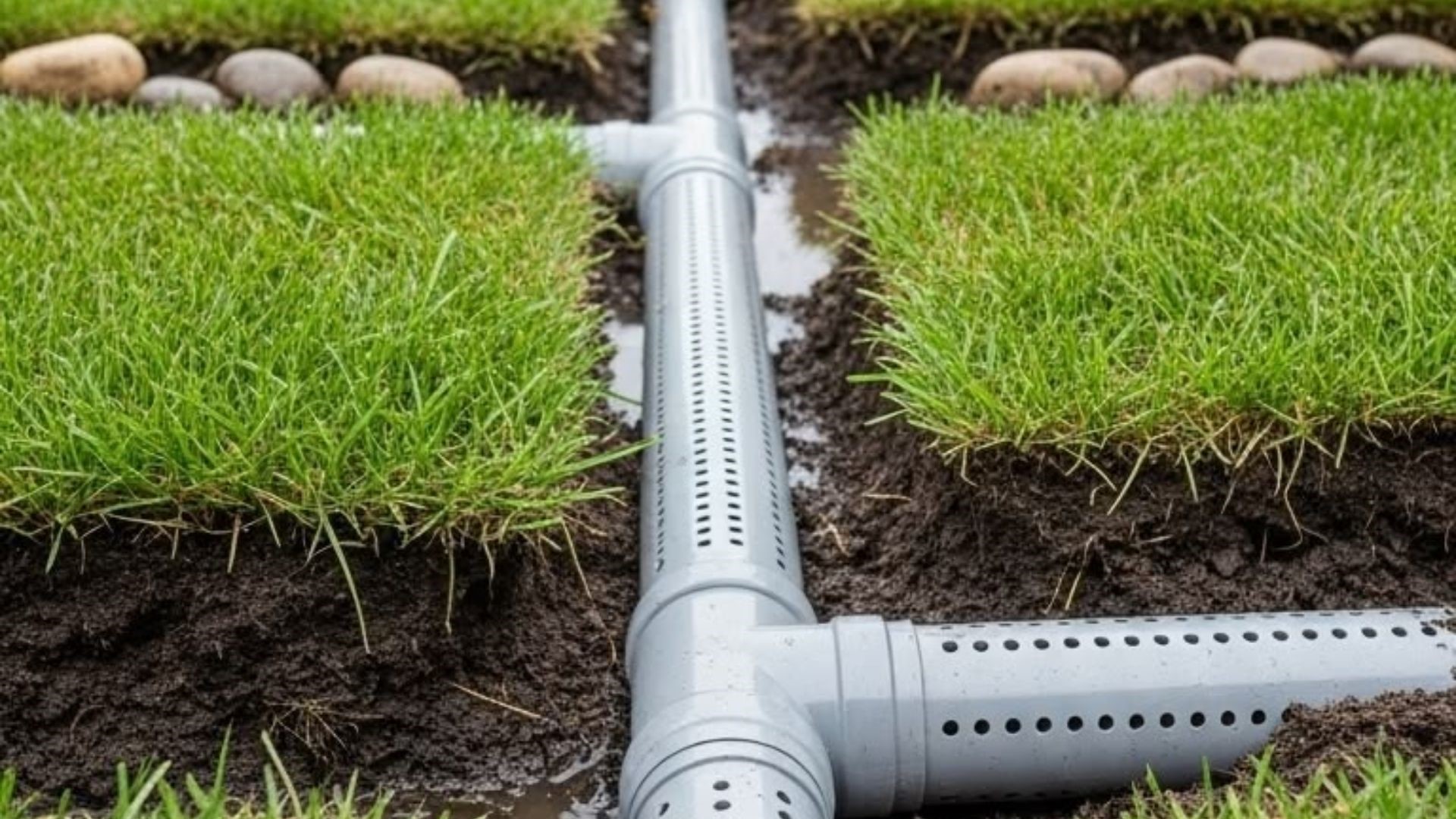
A French drain is often misunderstood because it sounds complex, but the concept is surprisingly straightforward. A French drain is a specific type of subsurface drainage solution designed to remove groundwater trapped beneath the soil. It consists of:
Instead of collecting visible surface water, a French drain intercepts moisture moving underground. Water seeps through gravel, enters the perforated pipe, and is redirected away from problem areas.
French drains are ideal for situations like:
The key distinction is visibility. Once installed, a French drain is mostly hidden. You may not even notice it working, which is exactly the point.
Many homeowners believe French drains solve all drainage problems, but that’s not true. They address subsurface water pressure, not heavy surface runoff from rainstorms.
In simple terms, A French drain handles water you don’t see, while broader drainage systems handle water you do see.
Understanding this difference is crucial before deciding which solution fits your property.
A yard drainage system is a complete water-management strategy, while a French drain is a targeted tool within that strategy.
Here’s how they compare conceptually:
Yard Drainage System
French Drain
Think of it like healthcare:
A yard drainage system is a full wellness plan.
A French drain is a specialized treatment.
Many properties actually require both working together. Surface drains remove rainfall quickly, while French drains relieve underground saturation that builds over time.
The mistake homeowners make is choosing one without understanding the source of the water problem. Proper diagnosis determines whether water is pooling on top, rising from below, or doing both simultaneously.
That distinction determines success or frustration.
Your yard is asking for a drainage system when problems appear after rainfall, rather than constantly.
Watch for these signs:
These symptoms indicate surface runoff is overwhelming your property’s natural drainage ability.
Homes built on flat terrain are especially vulnerable because gravity isn’t helping move water away. Instead, water spreads outward until it finds the lowest point, often your foundation.
A properly designed yard drainage system captures runoff immediately and redirects it before damage begins. Instead of waiting days for the yard to recover, water exits efficiently within hours.
If rain consistently changes how usable your yard feels, the issue is rarely temporary. It’s usually a sign that structured drainage pathways are missing.
A French drain becomes necessary when moisture problems exist, even without rainfall. Common indicators include:
These symptoms suggest groundwater pressure rather than surface flooding.
Water naturally travels through soil layers. When it encounters compacted earth or foundation walls, it builds pressure and seeks entry points into structures. A French drain relieves this pressure by giving underground water an easier escape route.
Homeowners sometimes install surface drains hoping to fix these issues, only to find the problem unchanged. That’s because the water source lies below ground.
French drains quietly solve this hidden problem by redirecting moisture before it reaches vulnerable parts of your home.
Drainage projects often start with good intentions and end with frustration. Common mistakes include:
Online tutorials make drainage look simple, but soil composition, elevation, and water volume vary dramatically between properties.
One popular mistake is copying a neighbor’s solution. Two yards on the same street can have completely different underground water patterns.
Another issue is relying on temporary fixes like gravel patches or shallow trenches. These may work briefly but fail during heavy storms, often worsening erosion.
Drainage isn’t guesswork. It requires understanding how water behaves across seasons, storms, and soil conditions. Without proper planning, homeowners often spend more correcting failed installations than they would have investing in a professionally designed solution from the start.
Effective drainage begins long before installation. Professionals analyze how water interacts with your entire property.
A proper assessment includes:
This process reveals whether the issue requires a French drain, a full yard drainage system, or a combination of both.
Drainage solutions succeed when designed holistically. Installing components without understanding water patterns is like placing buckets under leaks instead of fixing the roof.
Professionally designed systems anticipate future storms, seasonal changes, and long-term soil movement. The result isn’t just immediate improvement; it’s lasting protection that prevents recurring problems year after year.
Good drainage design feels invisible once completed because water simply behaves the way it should.
Yard drainage systems typically need:
French drains require:
Maintenance is usually simple because most work happens underground. When installed correctly, systems can function efficiently for decades with only routine attention.
Regular inspections ensure water continues flowing freely, preventing small obstructions from turning into larger drainage failures later.
Understanding Yard Drainage System vs French Drain ultimately comes down to recognizing how water behaves on your property. Surface flooding and underground saturation are different problems, and solving them correctly requires the right strategy, not guesswork.
The right drainage solution transforms how a home feels after rain. Lawns recover faster. Foundations stay protected. Outdoor spaces remain usable instead of being frustrating.
When drainage is properly designed, you stop worrying about storms entirely because water moves exactly where it should.
For homeowners seeking lasting solutions, experienced professionals make the difference between temporary fixes and long-term protection. C&C Wirth Contractors brings the expertise needed to evaluate drainage problems accurately and implement systems designed for durability, efficiency, and peace of mind.
Because the best drainage system isn’t just about removing water; it’s about protecting your home for years to come.
Q-1. Is a French drain part of a yard drainage system?
Ans. Yes, a French drain is often one component of a larger yard drainage system. While a full drainage system manages surface water across your entire property, a French drain specifically handles underground moisture and groundwater pressure. Many homes benefit from using both together, creating a complete solution that controls water above and below the soil.
Q-2. How long do drainage systems last?
Ans. A professionally installed drainage system can last 20-30 years or more, and in many cases even longer. Longevity depends on proper design, quality materials, soil conditions, and occasional maintenance like clearing debris or inspecting outlets. When installed correctly, drainage solutions are built to protect your home for decades, not just seasons.
Q-3. Can drainage be added to an existing yard?
Ans. Absolutely. Most drainage systems are designed to be retrofitted into existing landscapes without major disruption. Professionals carefully plan installation to preserve lawns, gardens, and hardscaping while improving water flow beneath the surface. In many cases, homeowners see dramatic improvement without needing a full yard redesign.
Q-4. Do drainage systems increase property value?
Ans. Yes, effective drainage significantly improves both home value and buyer confidence. Standing water and moisture issues are major red flags during inspections. A properly functioning drainage system protects the foundation, prevents future damage, and reassures potential buyers that the property has been well maintained.
Q-5. How do I know which solution I need?
Ans. The right solution depends on where the water problem starts. Surface puddles usually require a yard drainage system, while constant dampness or basement seepage may call for a French drain. A professional evaluation analyzes slope, soil, and water movement to identify the root cause, ensuring you invest in the correct fix the first time instead of guessing.