85 Mansion Blvd Parkersburg, WV 26101
E-mail us: [email protected]
MONDAY-FRIDAY 7AM - 4PM EMERGENSIES BASED ON AVAILABILITY

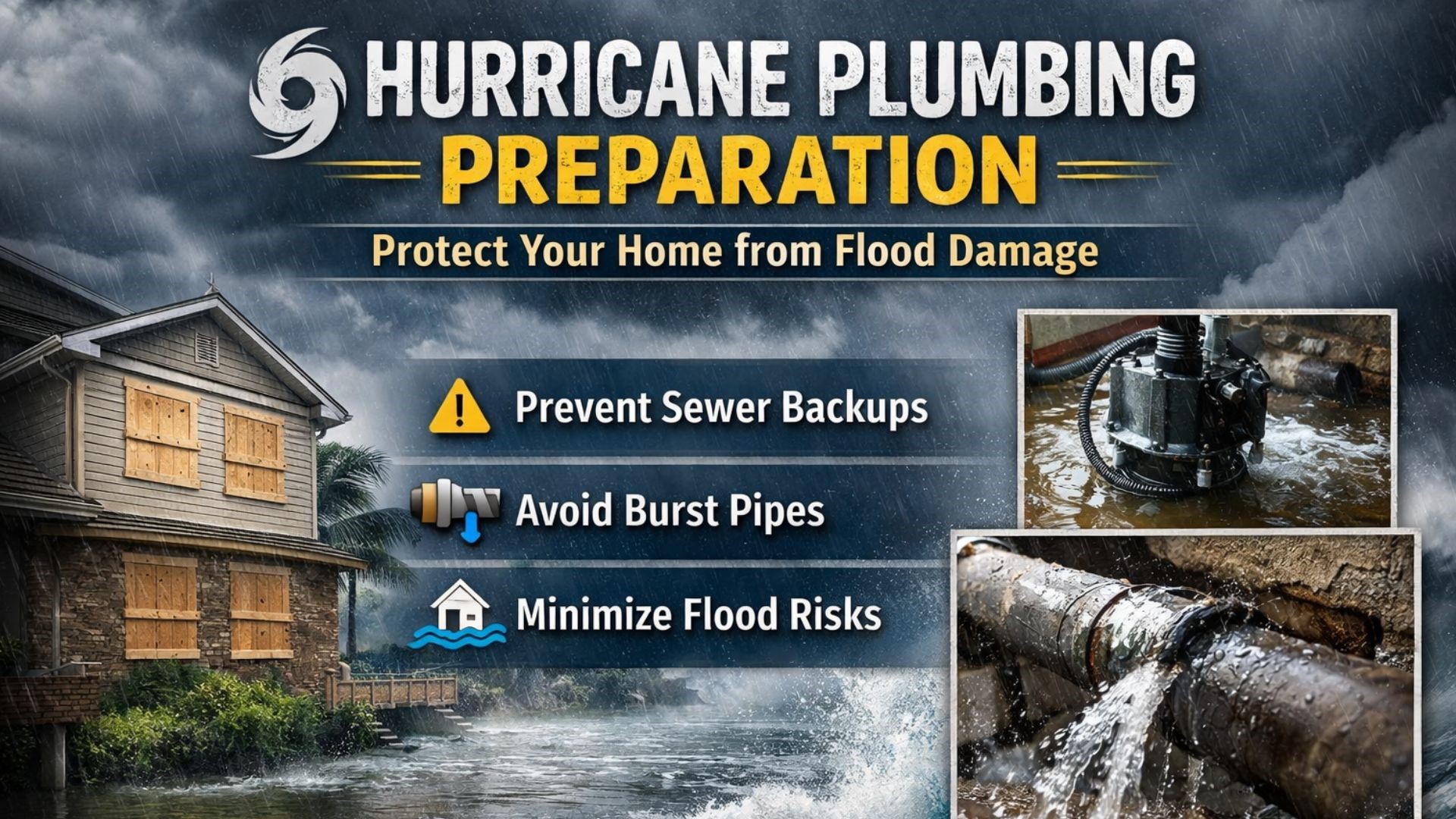
What comes to a homeowner’s mind when a hurricane approaches? We believe that boarding up windows and patio furniture is the first thing you’ll want to save. However, the most devastating damage can come from a source within your own home. You must be wondering how that’s possible. The answer is simple: through your plumbing system. Torrential rains, storm surges, and power outages can cause a lot more damage than you can imagine. They can turn pipes, drains, and sewers into a vector for indoor flooding, which can be catastrophic for you. For families in any region, hurricane plumbing preparation is a critical line of defence for your property and your family’s health.
This web blog covers more than the basic checklist. We will provide a detailed and actionable manual for safeguarding your home. Implementing these measures, you can reduce the risk of sewer backups, structural water damage, and costly repairs.
As a West Virginia and Ohio community for over 75 years, C&C Wirth Contractors has helped many generations of homeowners protect their homes.
True protection begins long before the first storm warning. This phase of hurricane plumbing preparation is about systematic readiness, transforming your home’s plumbing from a vulnerability into a secure asset.
It is the most important step in your preparation for plumbing in a hurricane. During the emergency that is the flooding, you should be capable of halting the flow of municipal water into your house to ensure that the contaminated flood water is not sucked back into your clean water mains (backflow).
A typical 40-50 gallon of water heater is heavy and top-loaded. It can also be tipped over by floodwaters or by moving foundations, and lead to a very hazardous break.
Direct sewage backflows via floor drains, sinks in the basement, and washing machine drain lines. Pre-emptively seal them.
The first system to number one is the drainage in the exterior of your home when the hurricane rains attack. The strengthening of it is one of the essential aspects of external hurricane plumbing preparation.
Blocked gutters lead to overflow of water, which pours down your siding and floods the area directly over your foundation. The last thing you want is a lot of water.
Clean The Gutters And Downspouts: Get rid of all leaves, twigs, and debris available in the gutters and downspouts.
Divert Water Away: This should make sure that downspouts are at least 6 to 10 feet away from the foundation of your home. Extension of downspouts or splash blocks can also be used to run the water out to the yard drainage path and not on the building.
When you have a sump pump in the basement or crawlspace, all of lower-level of your place will be dependent upon it. It always ensures floods when it fails in a storm.
Conduct a Test: Fill the sump with 5-gallon of water. The pump must be able to start automatically, eject the water fast, and stop. Listen for unusual noises.
Test Discharge Line: Test: Make sure that the outside drainage area is free of debris and drainage is not by the base.
Battery Backup: Hurricanes and power outages are partners-in-crime. A battery backup system is no luxury, but a very essential component in plumbing preparedness to hurricanes in the present day. Check the backup system based on its manual.
Check the foundation of your house externally. Find cracks or holes in the pipes, cables, or conduit penetration of pipes. Block any holes that are bigger than 1/4 inch with hydraulic cement or urethane caulk.
These investments present the greatest protection and a sense of security to homeowners in flood-prone regions or those with the aim of getting optimal protection.
This is the final protection against sewer back-ups. On the main sewer line, a backwater valve that functions as a one-way gate. It lets the waste go, but if sewer water attempts to move back into your house, it automatically shuts off.
Installation Kits: A professional installation is necessary. It must be accurately installed by a qualified professional in the appropriate portion of your main drain line. We check the arrangement of your home at C&C Wirth to find the right place to place this high-power device.
These are miniature, low-cost sensors that give advanced notifications. Put them on the flooring in front of your heater, sump pump, washing machine, and the basement. Whenever they sense water, they issue a very loud alarm, which gives you much time to act before the slight leakage turns into a flood.
As the storm comes, your strategic plans turn into action and attention. Making safety a priority should be your ultimate criterion.
You have found and tried your valve of supply. Now, know when to use it.
The Trigger: Turn off the main supply of water in your house in case of any imminent flooding of your region, loss of power, or evacuation order. It is preferable to carry an early pipe than a bursting one, pouring water into a house that has flooded.
The Right Way: Turn the main shut-off valve clockwise and make sure that it is completely closed. Then, in order to release the pressure in the pipes and give the water somewhere to get out, go to the highest faucet in your house (such as a bathroom on the second floor) and switch on the water a little. Just let it trickle, i.e.Keep on till after that, it will produce a trickle, and attribute it to noise.
Do not use sinks, toilets, showers, or washing machines when you think there has been a backup in the sewer. These are gurgling drains, water pooling in tubs, or stench. Plugging any appliance causes an overload to an already congested system and would drive dirty water into your house.
NEVER enter flooded sections of your basement or home in case water can be touching your electrical outlets, appliances, or your electric panel. The risk related to electrocution is high.
Heed Evacuation Orders. There is no worth in your life in taking a risk. Move your evacuation checklist to do the hurricane preparation planning of your plumbing and go.
The hurricane plumbing preparation is not done yet, as the winds have subsided and the floodwaters have subsided. As a matter of fact, the hardest step to secure your own house starts here. There is a strong possibility of transforming an unnoticed harm into a very expensive and extensive catastrophe unless there is a comprehensive evaluation to resume normal life. This guide will see you through the process of making sure that your plumbing system is safe and sound before using it in an orderly manner.
The ultimate consideration before you start inspecting one of the pipes is your own safety.
Waiting for the Authoritative “All Clear”: Do not move to your home without the word of the local authorities. It is advisable not to come into contact with downed power lines, nor go into a building that seems structurally irregular.
Record Before You Clean: Before you start cleaning or removing any damage, take extensive photographs and videos of all damaged areas and evidence before you locate any. This is an essential document in insurance claims.
Possibly Contaminated: Floodwater is a toxic combination of sewage, chemicals, and debris. Wear protective equipment (masks, boots, gloves) and wash your hands in a thorough manner after contact.
A systematic check assists in identifying the issues that do not just jump out. Movements of saturated soils may cause cracks in pipes, making them leak gradually.
Follow this room-by-room guide:
| Area to Check | What to Look For | Why It Matters |
| Visible Pipes (Basement, under sinks) | Cracks, bulges, corrosion, moisture, or dripping. | Even a small leak can cause major water damage and mould over time. |
| All Faucets & Fixtures | Turn them on. Check for low water pressure, cloudy/discolored water, strange odors, or unusual tastes. | This indicates potential mainline issues or a contaminated water supply. |
| All Drains & Toilets | Flush toilets and run water down drains. Listen for gurgling sounds and watch for slow drainage. | These are classic signs of a blocked or damaged sewer line. |
| Water Heater | Look for rust, corrosion, or signs that it was submerged. Check that it is upright and stable. | A flooded water heater can be a serious safety hazard and may need replacement. |
| Water Meter & Main Shut-off | Check for pooling water or soil disturbance near the meter. Ensure your main shut-off valve operates smoothly. | This can indicate a breach in the main service line between the street and your home. |
Good paperwork is something you should not bargain for when it comes to your post-storm hurricane preparation plan for plumbing. It works your observations into good insurance money.
Even though DIY checks are useful, there are cases when expert knowledge is required urgently. It is essential to call a licensed plumber because he or she can:
Suspected Sewer Line Damage: Gurgling drains and backups, intrusion of tree roots, or the collapse of a line buried deep in the ground is possible, necessitating the use of the camera.
Water Contamination Issues: It is possible to test your water supply and have a safe and complete system disinfection with the help of professionals.
Hidden Leaks: A water meter can run on no water, or you may be able to hear water running in the walls. This is a leak that a professional using acoustic and infrared equipment can detect without anything being dug up.
Gas / Electrical risks: Water heater, pump, or any other appliance that has flooded should be inspected by a professional in order to prevent the risks of fire, explosion, or electrocution.
Important Water Gray Warning: Never drink,cook, or bathe in tap water in case there is some contamination, or if there is a report that officials have declared a boil water advisory. Each time you are using bottled water or boiling tap water, boil it forcefully at least one minute before being able to have the water professionally tested or the all-clear is given.
Proper plumbing preparation in relation to a hurricane is a cycle that starts way before the storm and continues until all the pipes are proven to be safe once the storm has subsided. Following these steps after the storms will save the health of your family and the structural integrity of your home, and it will help to make the entire process of recovery less stressful and more successful.
When the assessment points to a problem beyond your expertise, you need a local partner you can trust. C&C Wirth Contractors has been a partner to families in West Virginia and Ohio for more than 75 years. We know the special problems that our local climate presents to your house. Our professional technologists are licensed and, with the up-to-date diagnostic equipment, will detect any damage that is lurking, and we offer transparent, straightforward evaluation and repairs.
Don’t let hidden storm damage turn into a future crisis. Especially when your post-storm investigation shows the existence of any warning signs, or just when it brings the comfort of knowing that your building has been inspected professionally, call the C&C Wirth Contractors as soon as possible. Now that you are ready and have all you need to prepare to face the next hurricane, you can seek our assistance. We would be happy to assist you in finishing your hurricane plumbing preparation cycle and making sure your home is safe, secure, and ready to deal with whatever comes next.
Preferably, a simple visual check should be carried out within 24-48 hours of being secure to get back to your home. An additional check, consisting of checking all the fixtures, ought to be performed as soon as the utilities are reinstated and the boil-water notices are removed.
Proceed with caution. To begin with, make sure that the faucets of the house are shut. Then gradually turn back the main valve counterclockwise to open it once more. Close it in parts–a quarter-turn each time–and freeze to allow pipes to fill and get the pressure to level, and this helps avoid shocks into the system and ruptures. Hear the water running to fill the pipes and inspect immediately for any leakage.
Sewer backup is considered to be an emergency of the highest priority. These consist of several drains gurgling or backing up at once, nasty sewage odors through the drains, or having wastewater rising through floor drains. This becomes a serious health risk and must be dealt with by a professional.