85 Mansion Blvd Parkersburg, WV 26101
E-mail us: [email protected]
MONDAY-FRIDAY 7AM - 4PM EMERGENSIES BASED ON AVAILABILITY


There’s nothing quite like an Ohio autumn or the first quiet snowfall, but we all know that beauty comes with a price tag. Our homes take all the beatings; they handle the humidity of July and the ice of January without any complaints. But even the sturdiest house needs a little love to keep running. Ohio’s weather has many things, but consistency isn’t one of them. From muds of daring, the heat of summer, and the deep freeze of winter, your home goes through a lot throughout the year.
This Ohio seasonal home maintenance calendar guide is here to help homeowners take better care of their homes.
This calendar guide explains exactly what your home needs in all seasons. Think of it as your house’s personal upkeep plan written by people who have seen what seasonal shifts do to a roof and basements.
Ohio climatic conditions are not some uniforms- your economizing plan must be the same. Spring comes with rain and does not give the soil time to completely dry, thus creating high chances of basement and foundation water problems. The HVAC systems overheat and extend because of the summer.
Fall is the last chance to do business before the freezing weather puts an end to outdoor jobs. Winter is insensitively hydrolyzing roofs, pipes, foundations, and driveways, and corroding with freeze-thaw swellings.
National checklists on maintenance neglect these facts. Ohio homeowners have to utilize water in expressive ways, reduce vulnerability to freezing, and maximize seasonal systems. One of the best investments that you can have about long term home protection is in the form of a dedicated Ohio maintenance schedule of the home.

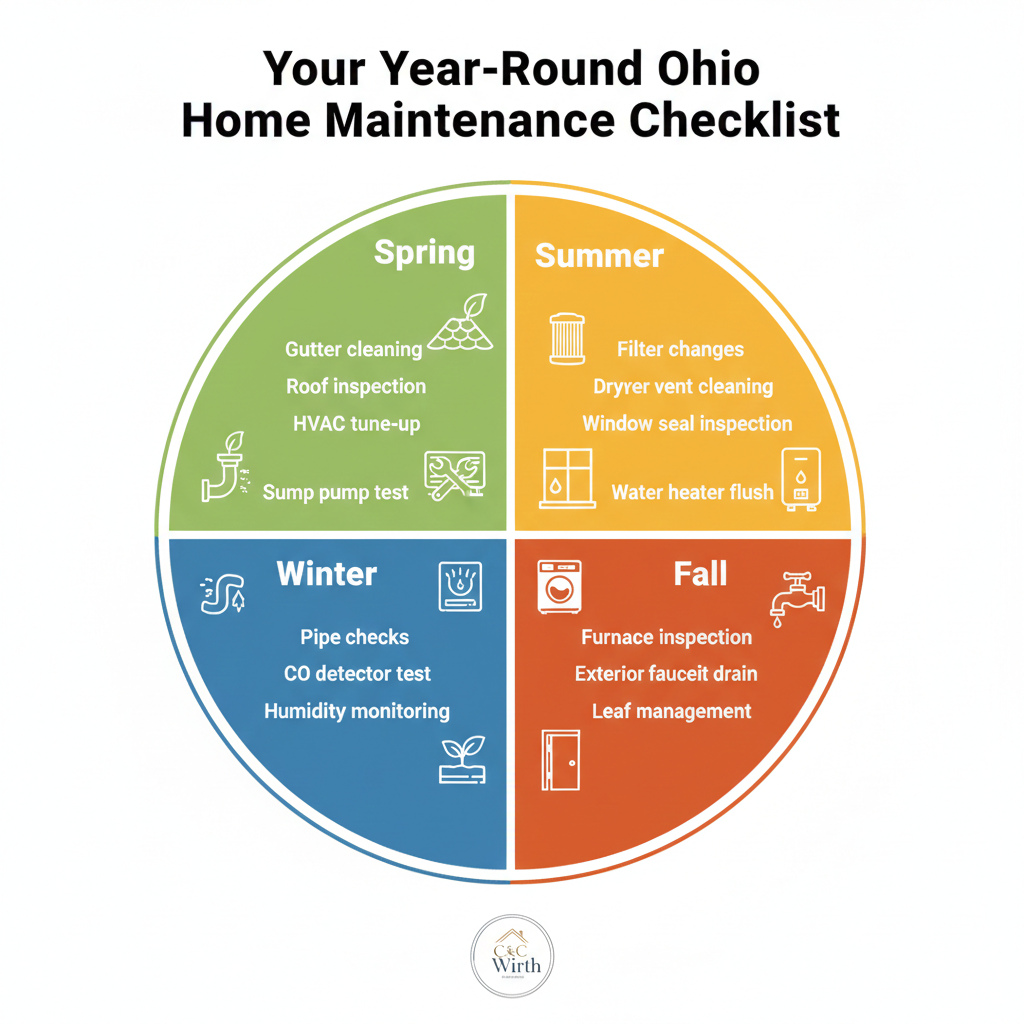
During the spring, the process of rebuilding winter damage and managing water is involved to tackle the occurrence of heavy rains.
Clean out one of the gutters and downspouts. Use extensions to ensure that there are water outlets that are at least five feet from the origination point.
On the roof or through a pair of field glasses, check the roofs for missing shingles, damaged flashing, or broken vent boots due to ice and kick-freeze and thaw.
Intentional Pelter Circumspect ( Your house ). Close minor cracks, take care of settled away soil, and have positive grading.
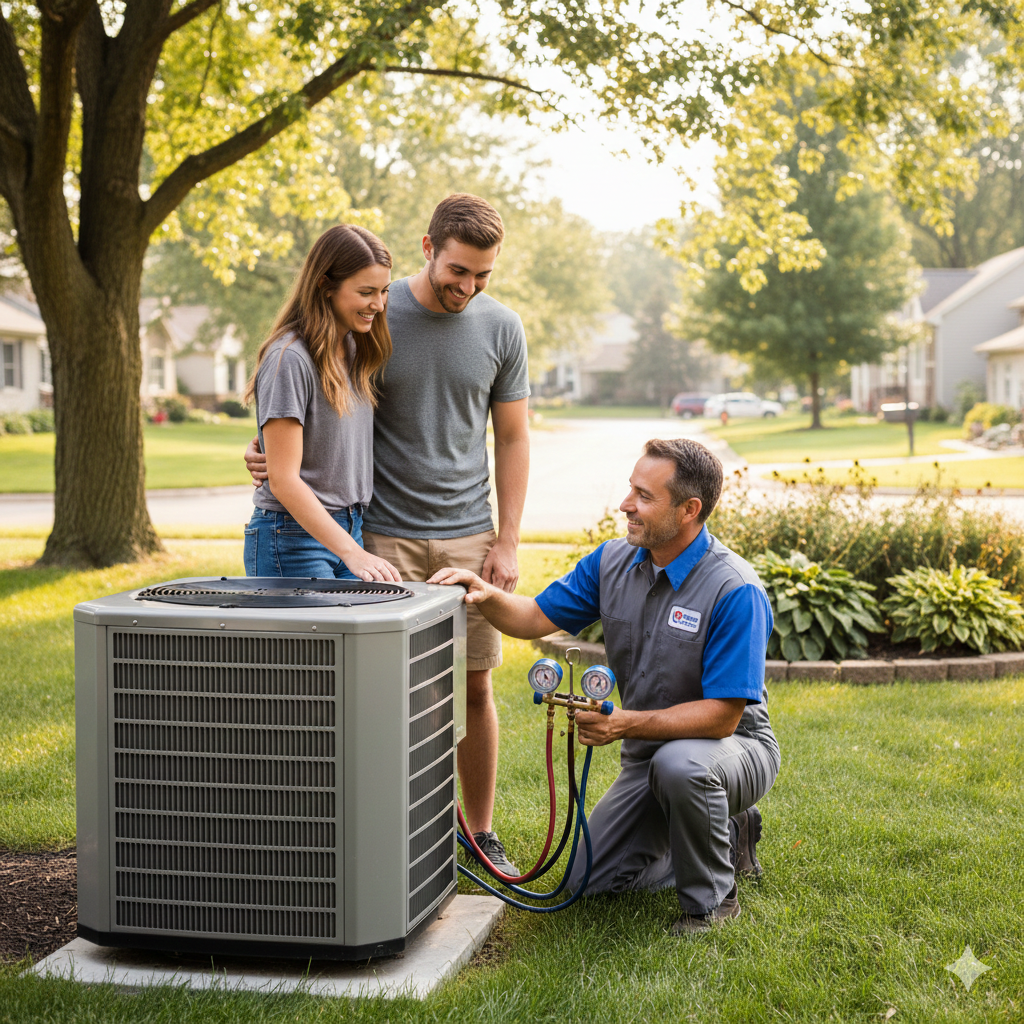
Book professional air conditioning sooner than the time before the demand shoots up during summer. This has less potential for breakdown risk and is more efficient.
Open up one of the valves gradually, and check all the areas, whether they leak or they have any sprinkler heads broken or worn.
Condition and fasteners of railings, fasteners, board condition, and check ledger boards. Power screw: Reposition when being used.
Wipe, Bleach, or clean up the screens before the insects come back.
Take away cold-weather dirt in siding, decks, and walkways with suitable pressure or light-wash techniques.
Cover asphalt and concrete surfaces to keep out the intrusion of water that causes cracks and damage from the frost.
Add water to the pit to test automatic activation and correct discharge. Battery-back Up: If you do not have a battery, you should consider one.
Water management. You have clean gutters, the proper grading, functioning sump pumps, and long downspouts that help maintain the basements, which makes it dry.
Summer is the time to maintain the systems of the house in order and eliminate problems indoors when the weather is pleasant.
Check every month and change when necessary. Contaminated air filters are more expensive and an overload to HVAC systems.
Make sure that there is a counterclockwise rotation of fans in order to generate a cooling down draft.
Application programmable or intelligent thermostats can be used when there are moderate setbacks during in-occupancy to conserve energy without laboring equipment.
Check sinks, toilets, water heaters, and visible basement piping systems for either moisture or corrosion.
Use food coloring in the tank. The flushing of the bowl indicates the failure of a flapper.
Get annual drain sediments to enhance the efficiency and life of equipment.
Keep lint-free in vents and outward exhaust hoods to minimize exposure to fire and enhance drying efficiency.
Weatherstripping Check least as the temp lowers in the fall.
Take care of peeling paint, cracked caulk, and wood when it is dry.
Safety and weather check roofs, doors, and stored material.
System efficiency. It is less expensive throughout the year due to clean filters, sealed envelopes, and maintained equipment.
The most crucial season in Ohio home maintenance is fall. Behind on this, and woe betaketh thee, will befallen as soon as spring-fifth–or at the heart of winter.
Arrange professional inspection of the furnace or boilers, such as heat exchanger inspections.
The prevention of fires and carbon monoxide is in the form of annual professional inspection and cleaning.
Eliminate leaf fall and check downspouts that may keep water away with motivation.
Turn off the inner valves, drain taps, and sprinkler systems to prevent the freezing of the pipes.
Store furniture and cushions, cleaning them so there is no moisture to cause them to freeze.
Cut the leaves regularly to maintain lawns and eliminate gutters.
Cracks are to be sealed before it is too late to repair.
Weather strips and door sweeps are some additional components used on the doors. Close the air-gates to minimize the cost of heating and drafts.
Inventory ice blowers, examination shovels, and snow clearance.
Get to ensure that all adults at home are aware of its location and that it is functioning well.
He or she should use a clean filter at the beginning of winter and install reminders for monthly changes.
Freeze prevention. Seal pipe leakages, check air leakages, and ensure that there is no problem with heating.
Indoor temperature should be maintained at above 55degF including when not in use, because frozen pipes may develop.
During windy days, use incense or candles in order to locate the leaks and use temporary seals.
To protect the wood and enhance comfort, environmental humidity inside the home should be 30-45 percent.
Check exposed pipes for frost, condensation, or leaks. Insulate pipes as necessary.
Monthly testing is essential. Replace batteries if you don’t have sealed units.
Fix cracked caulk to avoid moisture seeping behind walls.
Plan upcoming work, research contractors, and plan your budget to be prepared when warmer weather arrives.
A well-cared-for home is no accident. It requires dedication to routine and seasonal maintenance. For over 75 years, C&C Wirth Contractors has assisted Ohio residents in safeguarding their home investment by providing preventive maintenance, skilled repairs, and dependable service in plumbing, heating & air, carpentry, and general home care.
The what and when are provided by this calendar. The how is where C&C Wirth Contractors comes in. Let us help you safeguard your home through every Ohio season with planning and preparedness, not panic and reaction.
A: State checklists disregard the climate issues in Ohio. They fail to consider our freeze-thaw cycles that shatter foundations, our spring downpour that overwhelms drains, or our humid summers that over load Air-conditioning systems. The Ohio seasonal home maintenance calendar is a dedicated schedule that covers the specifics of conditions your home goes through, and each task is then applicable and timely.
A: Safety and safety. In case it is autumn, exterior plumbing winterization and heating system check-up should be considered as the priorities. In the case of springtime, consider gutters and air conditioning systems. Do not even think of trying to cram a year of work into a weekend.
A: One easy tip: When the job is connected to safety (gas, electricity, carbon monoxide), one is supposed to be done with special diagnostic tools (HVAC refrigerant amount, sewer cameras), or the owner of the house is going to suffer serious damage to their belongings in case of an error, employ a specialist.
A: Not coming out during one season can hardly lead to catastrophic failure. The impacts are, however, compounding. The gutter that you failed to clear out in the fall forms an ice dam in the winter that causes the water to creep under the shingles and thus rots the decking, thus causing water to enter the attic during brush warming in spring.
A: Yes, more importantly. Many Ohio houses are old and are not insulated, still have old plumbing and electrical systems, and are also not built on a stable foundation over the decades. Their maintenance needs are greater and more frequent, and the number of their vulnerabilities is immense.