85 Mansion Blvd Parkersburg, WV 26101
E-mail us: [email protected]
MONDAY-FRIDAY 7AM - 4PM EMERGENSIES BASED ON AVAILABILITY

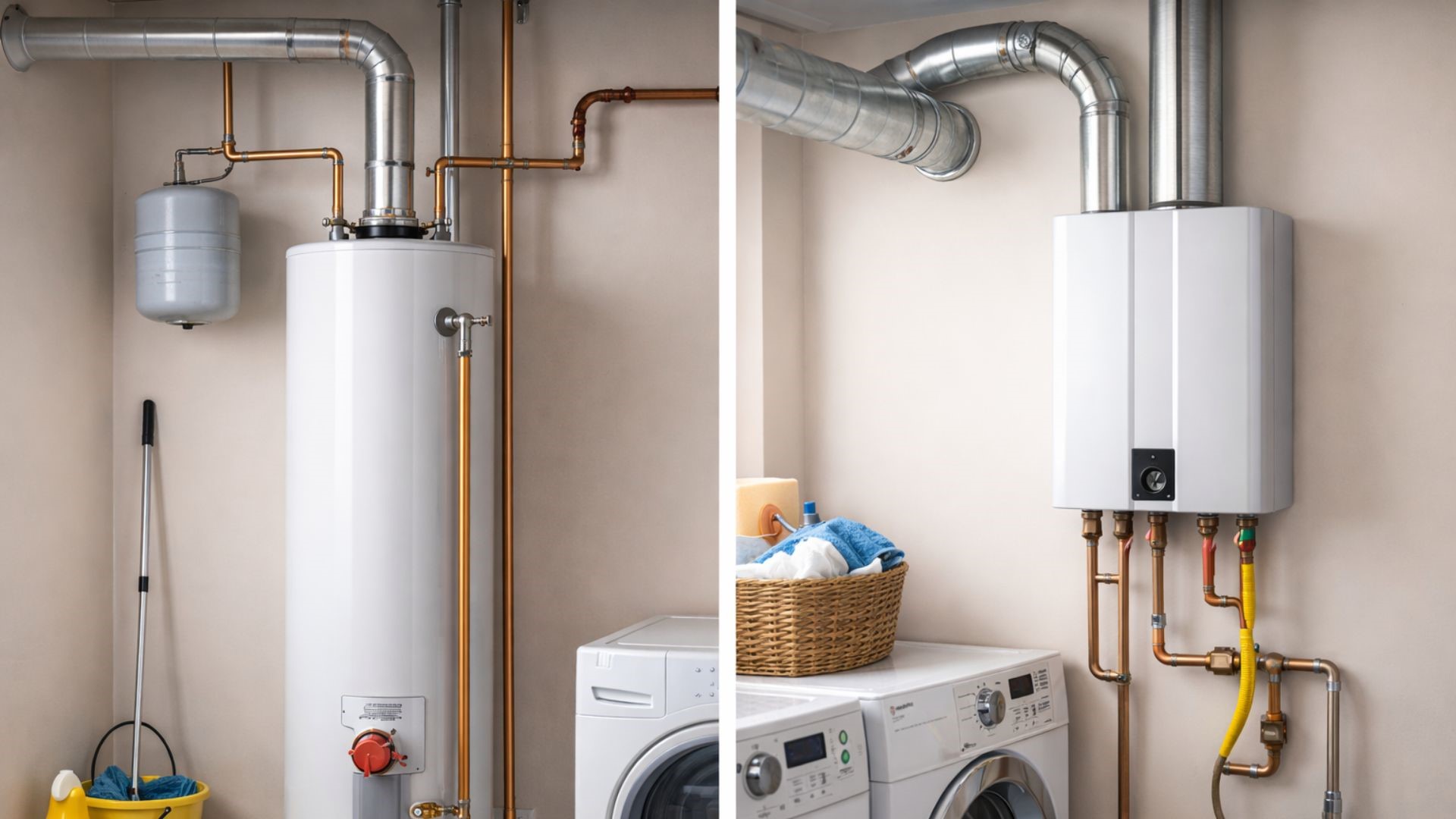
Choosing the right water heater in 2026 is no longer a simple replacement decision. Homeowners are now weighing energy efficiency, long-term operating costs, environmental impact, and future-ready technology. With utility rates rising and households demanding more consistent hot water performance, the discussion around Tank vs Tankless Water Heaters has become a priority for modern plumbing planning.
Water heating accounts for a significant portion of a home’s energy usage. Selecting the wrong system can lead to unnecessary expenses, discomfort, and maintenance headaches. Selecting the right one can improve daily convenience, reduce monthly bills, and add value to your property. This comprehensive guide explores both systems in depth, helping you confidently decide which solution fits your home or business best in 2026.
Traditional tank water heaters remain one of the most commonly installed systems in residential properties. Their long history and familiar operation make them a dependable option for many homeowners.
A tank water heater stores a specific volume of water inside an insulated tank and heats it using gas or electricity. The system maintains this water at a set temperature throughout the day. When a hot water tap is turned on, heated water is drawn from the top of the tank while cold water enters from the bottom to be reheated.
This constant heating cycle ensures hot water availability but also contributes to energy consumption even when no water is being used.
Tank systems are widely appreciated for their affordability and straightforward installation. They are especially practical for homes already equipped with similar systems, as replacing one tank with another often requires minimal modifications. These heaters are also capable of supplying hot water to multiple fixtures simultaneously, provided the tank capacity is sufficient.
Repair services for tank systems are generally less expensive, and most plumbers carry replacement parts, making maintenance simpler.
Despite their reliability, tank systems have limitations. Once the stored hot water is depleted, users must wait for the tank to refill and reheat. This recovery time can be inconvenient for larger households. Additionally, standby heat loss occurs as the system continually reheats stored water, contributing to higher energy bills over time.
Tankless water heaters represent a more modern approach to water heating. These systems are designed to provide hot water on demand without the need for storage.
Tankless units activate only when a hot water fixture is turned on. Cold water flows through powerful heating elements or burners, heating the water instantly as it passes through the system. This process allows for a continuous supply of hot water as long as the system capacity is not exceeded.
One of the most attractive benefits of tankless systems is energy efficiency. Because they only operate when hot water is needed, energy waste is significantly reduced. These systems are compact, freeing up valuable space, and typically have a much longer lifespan than traditional tanks.
Tankless units also reduce the risk of leaks associated with aging storage tanks.
The main drawback is the higher upfront investment. Installation may require electrical upgrades or gas line modifications. In high-demand households, a single unit may not meet simultaneous usage needs, making professional sizing and planning essential.
When comparing Tank vs Tankless Water Heaters, homeowners should look beyond surface-level features and focus on performance, efficiency, and suitability for their specific usage patterns.
Tankless systems generally outperform tank units in efficiency due to their on-demand operation. Traditional tanks lose heat over time as stored water cools, requiring reheating. While modern tanks have improved insulation, energy loss still occurs.
Tank systems are limited by capacity, which can lead to shortages during peak usage. Tankless systems eliminate this issue by providing continuous hot water, making them ideal for busy households.
Tank heaters usually last between 8 and 12 years. Tankless systems often operate efficiently for 20 years or more when maintained properly, offering greater long-term value.
Installation requirements have become a deciding factor as homes adopt smarter and more energy-conscious designs.
Tankless units are wall-mounted and compact, allowing installation in tight spaces. Tank systems require floor space and proper ventilation, which can limit placement options.
Many tankless systems demand higher power input. Homes with outdated infrastructure may require upgrades, an important consideration when evaluating Tank vs Tankless Water Heaters.
Tank replacements are typically quick. Tankless installations are more complex and must be handled by experienced professionals to ensure safety and efficiency.
Tank systems have lower purchase and installation costs, making them appealing for budget-focused homeowners.
Tankless systems consume less energy over time, leading to noticeable utility savings. Over several years, these savings can outweigh the higher upfront cost.
Tankless systems benefit from routine descaling, especially in areas with hard water. Proper maintenance extends system life and ensures peak performance.
When assessing Tank vs Tankless Water Heaters, long-term cost efficiency should always be considered.
Tankless systems work exceptionally well for smaller homes where usage is moderate and efficiency is a priority.
Larger homes require careful sizing to ensure adequate hot water flow. Comparing Tank vs Tankless Water Heaters becomes crucial in these scenarios to prevent performance issues.
Tankless systems are often ideal for commercial settings due to their ability to deliver consistent hot water without downtime.
Sustainability plays a major role in plumbing decisions today. Tankless systems reduce energy waste and emissions, while modern tank systems continue to improve efficiency standards. The environmental aspect further strengthens the importance of choosing wisely between Tank vs Tankless Water Heaters.
In 2026, both systems integrate smart technology, including temperature control, leak detection, and energy monitoring. Tankless systems often provide greater compatibility with smart home ecosystems, offering enhanced control and insights.
There is no single solution for every home. Budget, infrastructure, usage habits, and future goals all influence the decision. Homeowners seeking efficiency and longevity often prefer tankless systems, while those prioritizing simplicity and lower upfront cost may choose traditional tanks.
The final decision in the Tank vs Tankless Water Heaters discussion should always involve expert guidance.
At C&C Wirth Contractors, we proudly serve homeowners and businesses across West Virginia with expert plumbing solutions. We specialize in evaluating water heater needs, recommending the right system, and delivering flawless installations. Our team stays updated on the latest technologies, codes, and efficiency standards to ensure long-lasting results.
When you choose us, you gain a partner committed to quality workmanship, honest advice, and dependable service. From system upgrades to emergency replacements, we approach every project with precision and care. C&C Wirth Contractors stands as a premier source of professional plumbing services in West Virginia, trusted for reliability, expertise, and customer satisfaction.
Ans: Installation time varies depending on upgrades needed, but professional installation ensures safety and optimal performance.
Ans: Yes, with proper evaluation and necessary upgrades, tankless systems can be installed successfully in older properties.
Ans: Regular flushing and inspection help prevent sediment buildup and extend system lifespan.
Ans: Our experienced team at C&C Wirth Contractors provides expert assessments and personalized recommendations for every home.