Parkersburg W.V. 26101
E-mail us: [email protected]
MONDAY-FRIDAY 7AM - 4PM EMERGENSIES BASED ON AVAILABILITY

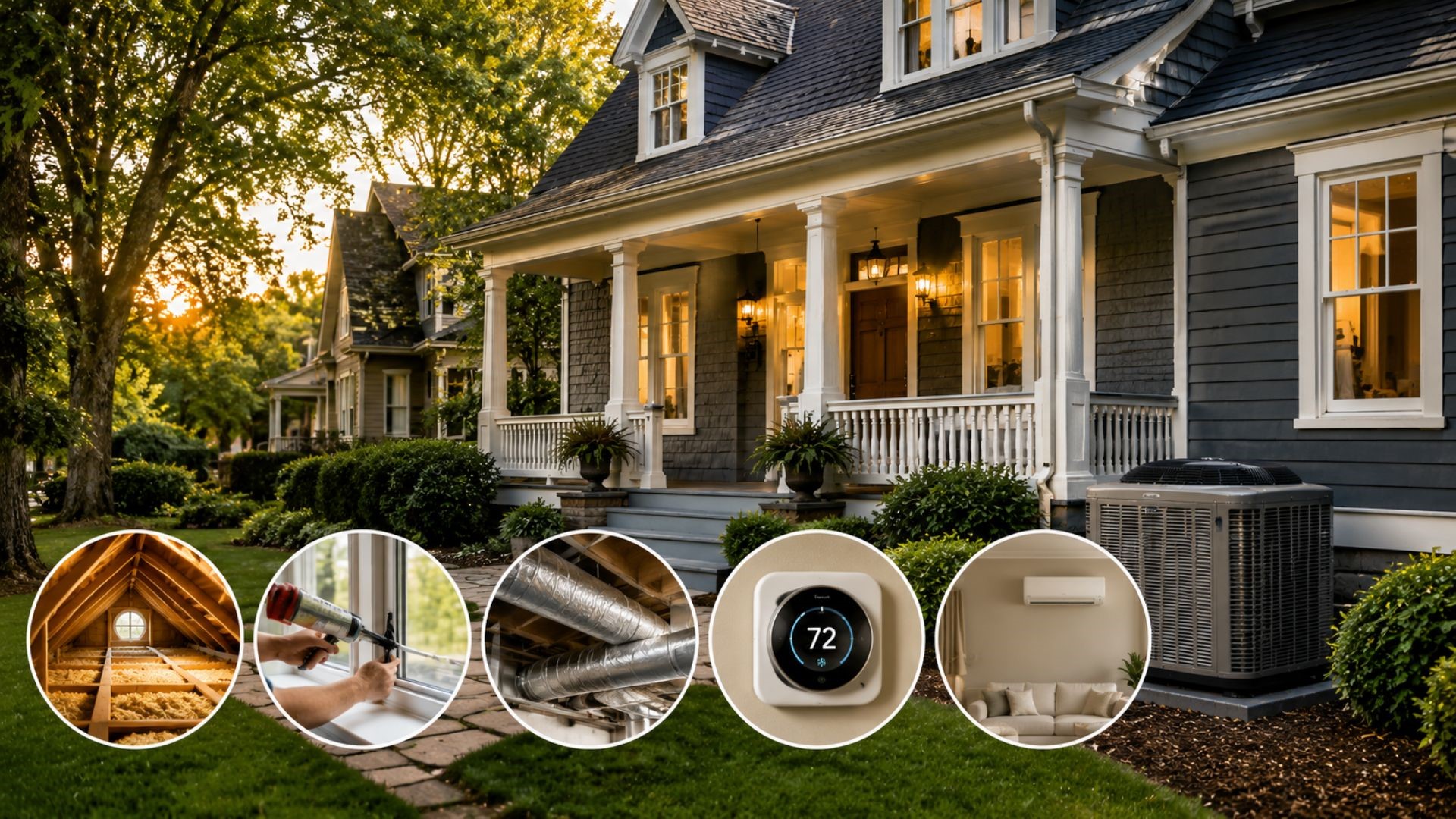
Choosing the right HVAC upgrades for older homes can make the difference between a house that’s expensive to heat and cool and one that’s comfortable in every season. Across West Virginia and Ohio, many older homes were built long before today’s energy-efficiency standards existed. While these homes offer timeless character and craftsmanship, they often struggle with uneven temperatures, outdated ductwork, poor insulation, and rising utility bills. Simply replacing an old furnace or air conditioner isn’t always enough. The best results come from understanding how the entire home performs and selecting upgrades that work together to improve comfort, efficiency, and long-term value.
Whether you own a historic farmhouse, a mid-century ranch, or a century-old family home, understanding which HVAC improvements deserve priority can help you make smarter renovation decisions while avoiding unnecessary expenses.
Unlike newer construction, older homes were rarely designed with today’s heating and cooling systems in mind.
Many properties throughout West Virginia and Ohio still contain:
Because of these issues, installing a larger HVAC unit doesn’t automatically improve comfort. In fact, an oversized system may cycle on and off too quickly, reducing efficiency, increasing wear, and leaving humidity levels unbalanced.
The most effective HVAC upgrades for older homes focus on improving how the home performs as a whole rather than simply increasing equipment capacity.
Insulation is one of the highest-return investments for older homes. Without sufficient insulation, heated or cooled air escapes through the attic, walls, and other poorly insulated areas, forcing HVAC systems to work much harder than necessary.
Benefits include:
This upgrade is particularly valuable in West Virginia, where cold, dry winters place significant demands on home heating systems.
Ohio homeowners also benefit because improved insulation helps homes handle rapid seasonal temperature swings more effectively.
Even well-insulated homes lose energy through small gaps around:
These hidden air leaks allow conditioned air to escape while outdoor air enters the home.
Professional air sealing improves comfort immediately and often reduces the size of HVAC equipment required during replacement. Smaller, properly sized systems generally operate more efficiently than oversized units attempting to compensate for uncontrolled air leakage.
If your home already uses ductwork, don’t assume it’s performing efficiently. Older ducts frequently develop:
According to energy experts, significant amounts of conditioned air can be lost before it ever reaches the living space.
Duct sealing and insulation help:
In many cases, improving existing ducts produces noticeable comfort improvements without replacing the entire HVAC system.
For many older homes, adding or replacing ductwork can be expensive, disruptive, or simply impractical. That’s where ductless mini-split systems shine.
Mini-splits consist of an outdoor unit connected to one or more indoor air handlers, delivering heating and cooling directly to specific rooms without relying on extensive ductwork.
They’re an excellent choice for:
One of their biggest advantages is zoned comfort. Instead of heating or cooling the entire house equally, homeowners can adjust temperatures in individual rooms based on occupancy and personal preference. For homes across West Virginia and Ohio, this often translates into improved comfort and lower energy consumption.
Heat pumps have become one of the most popular HVAC upgrades for older homes because they provide both heating and cooling in a single system. Modern high-efficiency heat pumps perform well in a wide range of climates and are especially attractive for homeowners modernizing aging HVAC equipment.
Benefits include:
Many newer heat pumps are specifically designed to perform effectively even during colder winter conditions, making them an increasingly practical solution for both West Virginia and Ohio.
However, every home is different. A professional assessment helps determine whether a heat pump is the best fit based on insulation levels, home layout, and local climate conditions.
Even the most efficient HVAC equipment can waste energy if it’s not managed properly. Smart thermostats help homeowners optimize heating and cooling schedules by automatically adjusting temperatures based on occupancy, daily routines, and energy-saving preferences.
Additional benefits include:
Pairing a smart thermostat with a zoning system offers even greater flexibility.
Instead of maintaining the same temperature throughout the entire house, zoning allows different areas to be heated or cooled independently. This is especially valuable in larger or multi-story older homes where certain rooms naturally stay warmer or cooler than others.
Both systems offer excellent efficiency, but the right choice depends on your home’s existing infrastructure and remodeling goals.
A ductless mini-split is often the better option if:
A high-efficiency heat pump may be ideal if:
Rather than choosing based on trends, homeowners should base their decision on a professional home evaluation and load calculation.
One of the biggest mistakes homeowners make is assuming HVAC equipment should be selected solely according to the size of the home. In reality, two homes with identical square footage can have dramatically different heating and cooling requirements.
A proper load calculation considers:
This comprehensive assessment ensures the HVAC system is correctly sized for optimal comfort and efficiency.
Skipping this step can result in inaccurate HVAC upgrades for older homes, which reduce performance and increase operating costs over time.
Older homes across West Virginia and Ohio deserve HVAC solutions that respect their character while delivering modern comfort and efficiency. The most successful HVAC upgrades for older homes don’t begin with installing the largest heating or cooling system; they begin with understanding how the home performs as a whole.
Improving insulation, sealing air leaks, upgrading ductwork, and selecting appropriately sized equipment can dramatically improve comfort, lower utility costs, and extend the life of your HVAC system. Whether a ductless mini-split, a high-efficiency heat pump, or targeted energy improvements is the right solution, every upgrade should be guided by a professional home assessment rather than guesswork.
By taking a whole-home approach, homeowners can enjoy consistent temperatures, greater energy efficiency, and a healthier indoor environment for years to come.