85 Mansion Blvd Parkersburg, WV 26101
E-mail us: [email protected]
MONDAY-FRIDAY 7AM - 4PM EMERGENSIES BASED ON AVAILABILITY

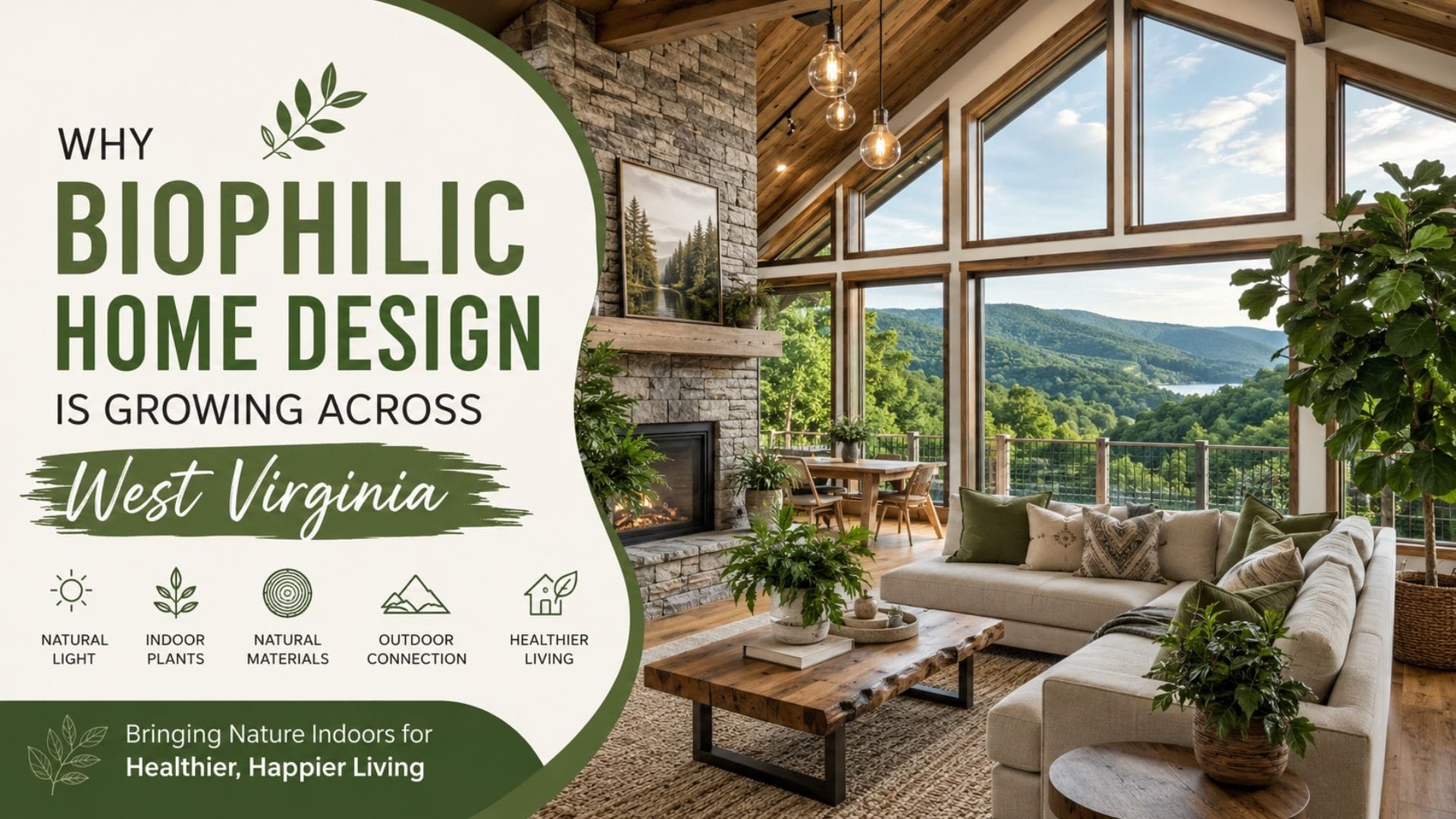
Across the Mountain State, homeowners are rethinking what they want from their living spaces. Instead of focusing solely on aesthetics, many are prioritizing wellness, comfort, and a stronger connection to the natural world. That shift is one of the biggest reasons Biophilic home design in West Virginia is gaining momentum. By incorporating natural materials, abundant daylight, organic textures, and stronger indoor-outdoor connections, biophilic design helps homes feel healthier, calmer, and more inviting.
For West Virginia residents surrounded by rolling hills, forests, rivers, and scenic landscapes, bringing elements of nature indoors feels like a natural extension of the environment they already love. More than a design trend, biophilic design represents a different way of living, one that encourages balance, relaxation, and a deeper connection to the spaces we call home.
Biophilic design is based on a simple idea: humans have an innate connection to nature.
The term “biophilia” literally means “love of life” or “love of living things.” In home design, this philosophy focuses on integrating natural elements into interior spaces to improve well-being and create a more harmonious environment.
Common biophilic features include:
Rather than treating nature as something outside the home, biophilic design makes it an essential part of everyday living.
Few states are as naturally suited to biophilic design as West Virginia. The state’s identity is deeply tied to its natural beauty. From mountain views and dense forests to rivers and open landscapes, nature is woven into daily life.
Many homeowners already enjoy breathtaking surroundings outside their windows. Biophilic home design simply extends those experiences indoors. Instead of separating interior spaces from nature, homeowners create a seamless relationship between the two.
The result is a home that feels more connected to its environment and more reflective of the region’s character.
Today’s homeowners spend more time at home than ever before. As a result, people are paying closer attention to how their surroundings affect their mood, productivity, and overall well-being.
Research consistently shows that natural environments can help reduce stress, improve focus, and support mental wellness. While homeowners may not always think in those terms, they often recognize how different spaces make them feel.
Biophilic home design in West Virginia appeals to this growing desire for healthier living environments by creating spaces that feel calm, restorative, and emotionally uplifting.
One of the most impactful elements of biophilic design is natural light. Dark interiors often feel closed off and less inviting. In contrast, sunlight creates warmth, openness, and energy.
Many remodeling projects now prioritize:
These features allow daylight to travel deeper into the home while strengthening visual connections to the outdoors.
For homeowners in West Virginia, where scenic views are often a major asset, maximizing natural light helps showcase the beauty surrounding the property.
Another reason biophilic design continues to grow is its use of natural materials. Homeowners are increasingly choosing:
These elements add warmth and character while helping homes feel grounded and authentic.
Unlike many design trends that quickly become dated, natural materials have a timeless quality that remains attractive year after year. This makes biophilic design both aesthetically appealing and practical for long-term investment.
Plants have become one of the most recognizable features of biophilic design. However, their role goes far beyond decoration. Indoor greenery introduces color, texture, and life into a space. Plants can soften hard surfaces, improve visual interest, and help create a more relaxing atmosphere.
Popular choices include:
Even a few strategically placed plants can dramatically change the feel of a room.
Many homeowners find that adding greenery is one of the simplest ways to begin embracing biophilic principles.
Modern homeowners increasingly want homes that flow naturally into outdoor living areas. Biophilic design supports this goal by creating stronger transitions between interior and exterior spaces.
Examples include:
These features encourage homeowners to engage more frequently with their surroundings while making homes feel larger and more open.
In a state known for outdoor recreation and scenic landscapes, this connection is especially valuable.
Today’s homeowners often deal with busy schedules, digital overload, and constant distractions. As a result, many are seeking spaces that promote relaxation and balance.
Biophilic home design in West Virginia helps address these needs by creating environments that feel peaceful without sacrificing functionality.
The combination of natural light, organic materials, greenery, and open spaces creates homes that support both productivity and relaxation. It’s a design philosophy that aligns perfectly with modern priorities.
Many biophilic design principles also support sustainability. Homeowners often incorporate:
These features can reduce energy consumption while creating healthier indoor environments. As sustainability becomes increasingly important, biophilic design offers a practical way to improve both environmental responsibility and quality of life.
Some design trends disappear within a few years. Biophilic design appears different. Its popularity isn’t driven by social media aesthetics or temporary fashion. Instead, it reflects a deeper desire for healthier, more meaningful living environments.
The principles behind biophilic design, natural light, connection to nature, comfort, wellness, and sustainability are unlikely to lose relevance.
In many ways, biophilic design feels less like a trend and more like a return to what humans naturally prefer.
The growing popularity of Biophilic home design in West Virginia reflects a broader shift in how homeowners think about their living spaces. People want homes that do more than look beautiful. They want environments that support their well-being, reduce stress, and strengthen their connection to the natural world.
For West Virginia homeowners, biophilic design feels particularly fitting. Surrounded by mountains, forests, and breathtaking landscapes, residents already understand the value of nature. Bringing those elements indoors simply enhances the experience.
As homeowners continue prioritizing comfort, wellness, sustainability, and timeless design, biophilic principles will likely become an even bigger part of the remodeling conversation.
Because sometimes the most powerful way to improve a home isn’t adding more space; it’s bringing nature a little closer.
Ans. Biophilic home design is an approach that incorporates natural elements such as sunlight, plants, wood, stone, and outdoor views into living spaces to improve comfort, wellness, and connection to nature.
Ans. West Virginia’s scenic landscapes, forests, and mountain views make it an ideal setting for biophilic design. Homeowners naturally want to bring those outdoor experiences into their homes.
Ans. No. Small changes such as adding plants, increasing natural light, using natural materials, or improving outdoor views can introduce biophilic elements without major renovations.
Ans. Many biophilic features, including natural lighting, energy efficiency, and quality materials, can enhance buyer appeal and contribute to long-term property value.
Ans. Start with indoor plants, maximize natural light, choose natural materials like wood and stone, and create stronger connections between indoor and outdoor spaces.