85 Mansion Blvd Parkersburg, WV 26101
E-mail us: [email protected]
MONDAY-FRIDAY 7AM - 4PM EMERGENSIES BASED ON AVAILABILITY

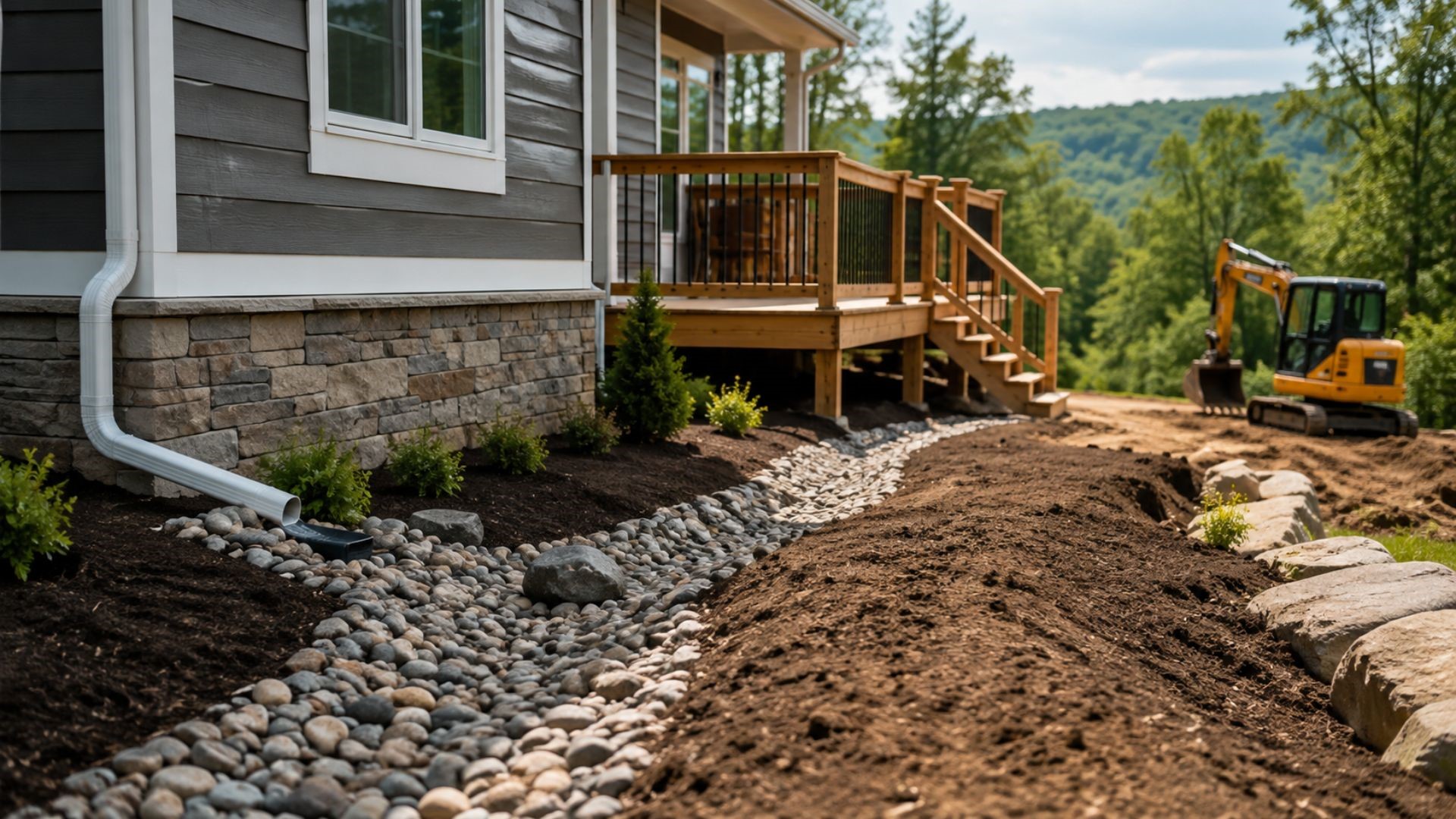
When planning an exterior remodeling project in West Virginia, most homeowners concentrate on choices such as siding colours, deck materials, and porch styles. One of the most important factors for long-term performance is often overlooked: grading and drainage. In a state with steep lots, heavy rainfall, and clay-heavy soils, poor water management can weaken well-planned West Virginia home renovation projects. Water that pools near foundations, incorrect slope around new decks, or insufficient drainage behind new siding can lead to rot, mold, foundation cracks, and premature material failure.
This blog post explains how grading and drainage directly affect the results of exterior home remodelling in West Virginia and which design choices help protect the investment over the long term.
West Virginia’s landscape and climate create particular challenges for exterior home remodeling work. Because the state has a hilly landscape along with frequent rain and snowmelt, water naturally moves towards low areas, which often means it flows towards a home’s foundation. These are the main climate and terrain factors that affect exterior work in the state.
When grading and drainage are not corrected during exterior renovation, water can:
Siding replacement is one of the most frequent exterior home remodeling projects in West Virginia, but if grading around the home isn’t corrected before new siding is installed, moisture can infiltrate behind the cladding.
Incorporating these exterior remodeling details will help to ensure siding is protected from moisture and allow easy inspection of the siding and sheathing in the future.
One of the most popular exterior home remodeling projects is deck construction, but decks require careful consideration of drainage, or they begin to suffer from settlement, rot, and other issues down the road.
Properly planned drainage details for deck remodeling are critical to avoid rot and settlement issues.
Porch upgrades and entryway remodeling are both prominent exterior home remodeling projects, but these areas also have some unique water management challenges.
Some common issues with entryways and porches include negative slope of porch slabs or landings towards the house, steps without proper drainage that allow water to collect at their bases, roof valleys or gutters that dump directly onto the roof or landing over an entryway, and improper flashing where a porch roof meets the main roof of the house.
When planning a porch or entry remodeling project, slabs and landings should be sloped away from the house at a minimum of 1/4 inch per foot.
Channel drains or similar systems should be installed at the bottom of steps in high rainfall areas
Proper flashing should be installed where a porch roof connects to the main roof,
Permeable pavers or gravel should be used on landing areas to reduce standing water.
These exterior remodeling details will help prevent moisture damage to framing behind entryways and allow porches to remain functional year-round despite the frequent snowfalls in West Virginia.
While C&C Wirth specializes in home remodeling rather than strictly foundation work, many exterior home remodeling projects uncover drainage problems that need to be addressed in addition to whatever project was initially requested. Some issues may arise when grading is modified for a new project, or problems may be discovered when working on a different part of the house.
Some reasons why foundation drainage becomes an issue during an exterior remodeling project include:
When dealing with foundation drainage in conjunction with home remodeling, French drains can be installed around the perimeter of the foundation when possible, surface drains can be installed in low areas around the house, gutters can be replaced or upgraded as needed, and drainage specialists can be brought in if more extensive repairs are necessary. Addressing potential foundation drainage issues during exterior home remodeling projects in West Virginia will help ensure that problems don’t arise later once the project is complete.
Many West Virginia homes are built on slopes or hillsides, and some water management techniques have to be modified for these types of properties. The biggest issues on sloped ground include uphill water runoff that will flow down and against the foundation, erosion around footings, and the limited space available to install traditional drainage systems such as French drains or dry well systems. If retaining walls have been built on the property, these may also need to have drainage systems incorporated into them.
Some adjustments that should be made when considering drainage for sloped or hillside properties include
The following exterior remodeling adjustments can make a world of difference when it comes to ensuring that water gets away from the house and does not cause damage to new siding or decks: installing downspout extensions on the uphill side of the house, directing roof runoff away from the foundation and down slopes, and using positive drainage with sloped porches or decks.
When planning materials for an exterior remodeling project, it’s a good idea to consider how those materials will interact with drainage and grading issues. The best materials for the sloping, rainy conditions common to West Virginia are discussed below.
For cladding and siding, fiber cement is ideal for areas with high humidity; brick or stone with proper flashing and weep holes is a good option for drainage, and vinyl siding should be installed with the proper clearance above grade and with house wrap. When it comes to decks and porches, composite decking with proper drainage features, pressure-treated lumber where necessary, and concrete or stone pavers with proper slope are all good options.
Hardscaping can include permeable pavers for walkways and patios, gravel or crushed stone in drainage areas, and native plants with deep roots that can help hold the soil together on slopes. Using drainage-conscious materials for exterior remodeling can prolong the life and improve the value of any home in West Virginia.
C&C Contractors has more than 19 years of experience helping West Virginia homeowners plan and complete exterior remodelling projects designed to handle local climate conditions. Whether the work involves siding replacement, deck upgrades, porch renovations, or entryway remodels, we build proper grading and drainage practices into each project.
Are you ready to start your exterior remodel? Contact C&C Wirth Contractors today for a complimentary consultation. We’ll assess your site and build a plan that protects your investments for years to come.
Browse Our Projects | View Residential Services | Get Your Free Estimate