85 Mansion Blvd Parkersburg, WV 26101
E-mail us: [email protected]
MONDAY-FRIDAY 7AM - 4PM EMERGENSIES BASED ON AVAILABILITY

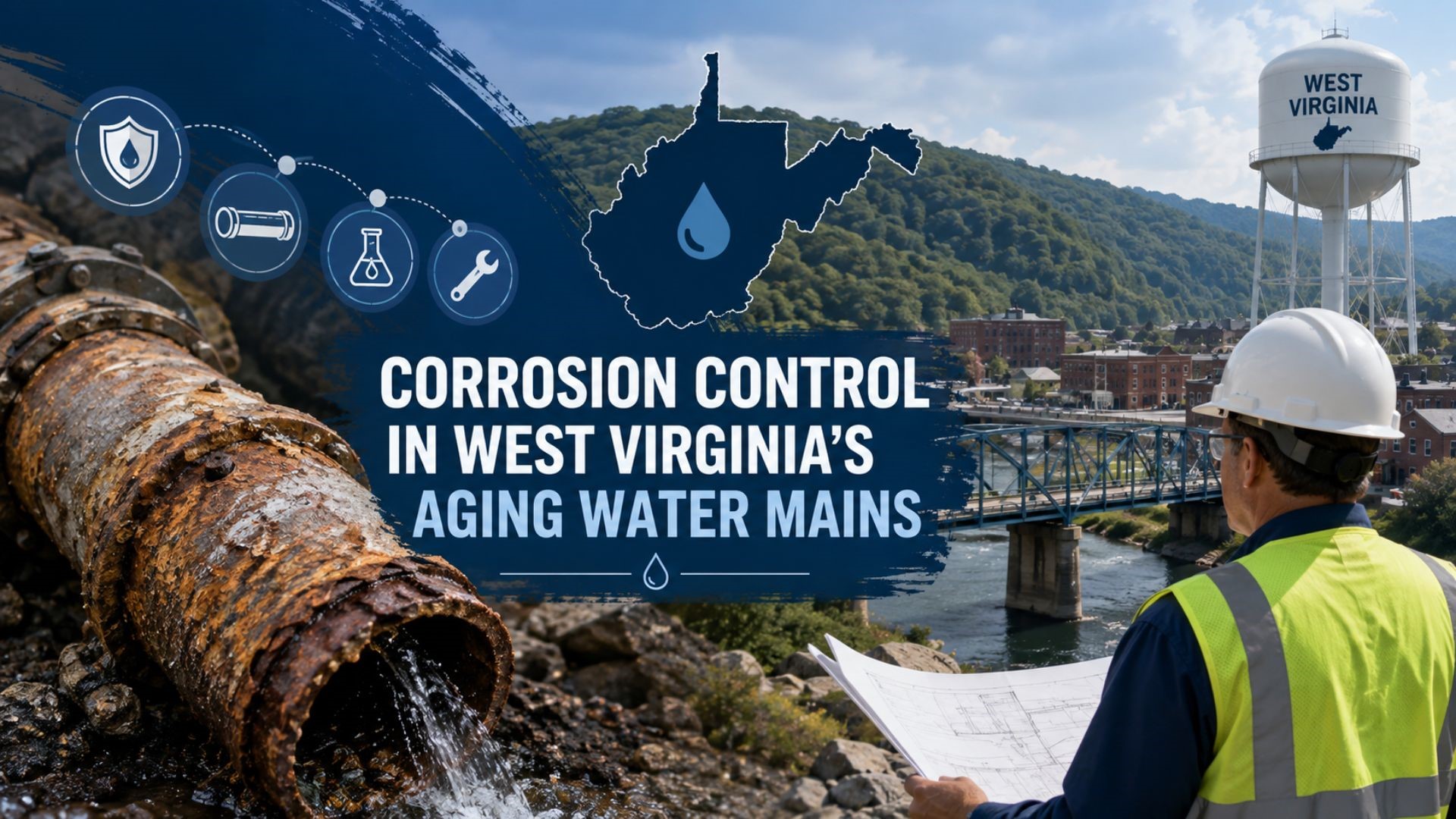
For plumbing professionals and decision-makers in West Virginia, corrosion control in aging water mains is no longer a niche concern; it’s a daily operational reality. Across the Mountain State, decades-old cast iron, steel, and early PVC pipes face aggressive soils, acidic mine-influenced waters, and steep, subsidence-prone terrain that accelerate deterioration. This blog breaks down the technical, regulatory, and practical dimensions of corrosion control in West Virginia plumbing systems, so you can design, specify, and maintain infrastructure that lasts.
West Virginia’s water infrastructure is among the oldest and most challenged in the U.S. The 2025 ASCE Infrastructure Report Card gave the state’s drinking water a D+, citing aging assets, high water loss, and funding gaps. In coalfield regions, the situation is even more acute: many systems were installed by coal companies in the early 1900s and have crumbled as operators left, leaving communities with unreliable or unsafe tap water.
But beyond age, three state-specific factors make corrosion control in aging water mains critical:
For plumbing contractors, engineers, and municipal officials, ignoring these factors means higher repair costs, more frequent boil-water advisories, and increased liability under state and federal drinking water rules.
West Virginia’s plumbing and water distribution standards are anchored in the 2015 International Plumbing Code (IPC) and 2015 International Residential Code (IRC), with state amendments that emphasize corrosion-resistant materials and protective measures. Key provisions include:
On the licensing side, SB 839 (2025) redefined “plumbing” work and mandated separate rules for residential vs. commercial plumbing, affecting who can legally perform certain corrosion-control and main-repair tasks. For contractors, this means double-checking scope-of-practice rules before bidding on municipal or utility projects.
Corrosion in WV plumbing systems is rarely a single-mechanism problem. Instead, it’s a combination of chemical, electrochemical, and mechanical factors:
1. External corrosion from aggressive soils
In many WV counties, soils are acidic, conductive, and rich in sulfates, ideal conditions for electrochemical corrosion of buried steel and iron pipes. Without protective coatings or cathodic protection, pipe walls thin, leading to leaks and catastrophic breaks.
2. Internal corrosion from water chemistry
Source waters influenced by AMD or naturally low alkalinity can be corrosive to iron, steel, and even copper. Low pH and high dissolved oxygen accelerate metal dissolution, releasing iron, manganese, and sometimes lead or copper into the distribution system.regulations.
3. Microbiologically influenced corrosion (MIC)
In low-flow, nutrient-rich sections of aging networks, biofilms thrive and create localized corrosion cells under deposits. This is especially problematic in dead-end mains and storage tanks with poor turnover.
4. Stress corrosion and mechanical fatigue
Subsidence from abandoned mines, sinkholes, and seasonal freeze–thaw cycles impose bending and tensile stresses on pipes. When combined with corrosion, these stresses cause crack initiation and rapid propagation, particularly at joints and fittings.
Effective corrosion control in aging water mains in West Virginia requires a layered, site-specific approach. Below are the most relevant strategies for plumbing contractors, engineers, and utility managers.
The human impact of inadequate corrosion control in aging water mains is starkly visible in southern West Virginia. Towns like Keystone and Northfork have lived under boil-water advisories for over a decade due to crumbling, corroded systems originally built by coal companies. Residents report going months without reliable tap water, relying on bottled water and hauled supplies for basic needs.
At the same time, state and utility investments are starting to address these gaps. Recent projects include:
For plumbing professionals, these trends signal growing demand for specialists who understand both field-level corrosion mitigation and regulatory compliance.
If you’re bidding on, designing, or maintaining water and sewer projects in WV, use this quick checklist to ensure your corrosion-control strategy is robust and compliant:
In West Virginia, effective corrosion control in aging water mains is not just an engineering detail; it’s a public health imperative and a business opportunity. For contractors and engineers who master the interplay of materials, chemistry, geology, and code, there’s a clear path to higher-value projects, fewer callbacks, and stronger community trust.
If you’re planning a specific project, whether a coalfield service-line replacement, a municipal main upgrade, or a new subdivision’s plumbing system, and want help aligning your design with West Virginia’s corrosion-control requirements, a focused conversation with a local corrosion specialist or state regulator can save time, money, and liability down the line.