Parkersburg W.V. 26101
E-mail us: [email protected]
MONDAY-FRIDAY 7AM - 4PM EMERGENSIES BASED ON AVAILABILITY

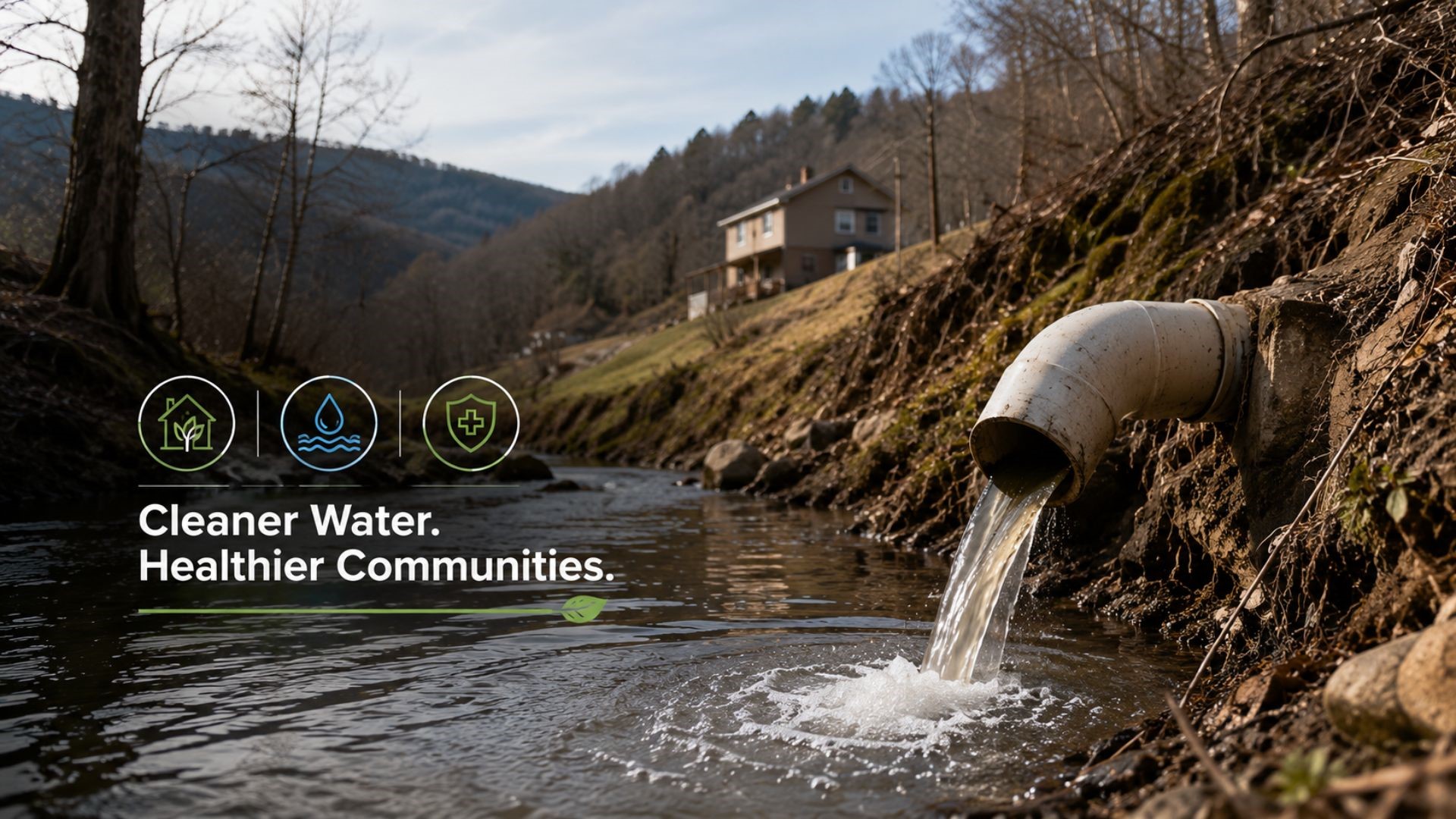
For many homeowners, flushing a toilet or draining a sink is something they never think twice about. The wastewater disappears, and life goes on. But in parts of rural Appalachia, the story is very different. Straight-piping sewage in West Virginia remains an ongoing infrastructure challenge that affects public health, environmental quality, and property values. Instead of flowing into a properly designed septic system or municipal sewer line, wastewater from some homes is discharged directly into nearby creeks, streams, or ditches without any treatment.
While significant progress has been made through public funding and community initiatives, the issue has not disappeared in 2026. Geographic limitations, aging infrastructure, and the high cost of wastewater solutions continue to make straight-piping a reality for some rural communities.
Understanding why this practice still exists, and why replacing it matters, is the first step toward creating healthier homes and cleaner waterways.
Straight-piping is exactly what the name suggests. A pipe carries wastewater directly from a home’s plumbing system into the surrounding environment without filtration or treatment.
Instead of entering:
raw sewage flows into:
The wastewater may include:
Unlike regulated wastewater systems, straight-piping provides no protection for people, wildlife, or water resources.
Many people assume straight-piping results from homeowner negligence. In reality, the reasons are often far more complicated. Many rural properties were built decades ago in locations where conventional septic systems simply cannot function effectively.
Common challenges include:
Large portions of West Virginia consist of narrow valleys and steep hillsides that make septic installation extremely difficult.
Proper septic systems require adequate soil depth for wastewater filtration.
Many mountain properties lack sufficient soil to support traditional drain fields.
Certain regions contain limestone formations with underground channels and sinkholes that complicate wastewater treatment.
Installing a new septic system or connecting to municipal sewer infrastructure can cost thousands of dollars. For many homeowners, these expenses remain a significant barrier.
West Virginia’s landscape is one of its greatest strengths. Unfortunately, it’s also one of the biggest challenges for wastewater management. Unlike flat suburban developments, many homes sit:
These locations often lack access to public sewer systems.
Building wastewater infrastructure across mountainous terrain requires extensive excavation, engineering, and long-term maintenance. As a result, many communities continue relying on individual wastewater solutions.
Untreated sewage doesn’t simply disappear. It travels.
Rainwater carries contaminants into nearby streams and rivers, where they affect entire ecosystems. Potential environmental consequences include:
Raw sewage introduces bacteria, viruses, nitrogen, phosphorus, and organic waste into waterways.
Excess nutrients encourage algae growth, reducing oxygen levels that fish and other aquatic species depend upon.
Continuous wastewater discharge changes soil composition and introduces harmful microorganisms.
Pollution rarely remains in one location.
Communities further downstream may experience reduced water quality and increased treatment costs.
Straight-piping isn’t only an environmental issue. It’s also a public health concern. Untreated wastewater may contain pathogens capable of causing illness through direct or indirect exposure.
Potential concerns include:
Children playing near contaminated streams and families relying on private wells may face additional risks if wastewater enters local water supplies.
Proper wastewater treatment significantly reduces these hazards.
Many homeowners focus only on installation costs. However, failing wastewater systems often create even greater long-term expenses. Potential consequences include:
Buyers increasingly request septic inspections before purchasing rural homes.
Mortgage lenders may require functioning wastewater systems before approving loans.
Small problems often become major reconstruction projects when ignored.
Properties may need system upgrades to meet current regulations or qualify for certain programs.
Investing in proper wastewater management protects both the home and its future marketability.
For most rural homes, septic systems remain the most practical wastewater solution. A properly designed system:
Modern septic technology has evolved significantly.
Today’s systems are designed for improved efficiency, environmental protection, and long-term reliability. Many homeowners are surprised to learn that alternative septic designs can accommodate difficult terrain that once seemed impossible.
Engineering innovations have expanded wastewater options beyond conventional septic systems. Depending on site conditions, homeowners may benefit from:
These systems provide additional filtration before wastewater reaches the soil.
Ideal for properties with shallow soil conditions.
Introduce oxygen to improve bacterial breakdown.
Provide more controlled wastewater dispersal across challenging landscapes.
Each property requires individual evaluation to determine the most appropriate solution.
Even homes with existing septic systems should watch for warning signs. Common indicators include:
Ignoring these symptoms often allows minor maintenance issues to develop into major repairs.
Professional inspections help identify problems before significant damage occurs.
Routine maintenance costs far less than system replacement. Simple preventive measures include:
Consistent maintenance extends system life while reducing unexpected expenses.
Homeowners who invest in prevention often avoid the stress and cost of emergency wastewater failures.
Across West Virginia, state agencies, nonprofit organizations, and local communities continue working toward improved wastewater infrastructure.
Programs supporting:
have already improved conditions for thousands of residents.
While challenges remain, continued investment is helping reduce reliance on outdated wastewater practices.
Wastewater systems involve far more than excavation. Successful projects require:
Improper installation can lead to premature failure, expensive repairs, and environmental problems.
Experienced contractors understand how to match system design with local terrain and property conditions. That expertise protects both homeowners and surrounding communities.
Wastewater management in rural West Virginia is entering a new era, driven by smarter technology, stronger environmental awareness, and the need for solutions that work with the state’s unique terrain. Modern systems are designed to do far more than dispose of wastewater—they protect public health, preserve local waterways, and provide reliable performance for years to come.
Today’s wastewater solutions focus on:
As more homeowners recognize the long-term benefits of modern wastewater systems, they’re investing in infrastructure that adds value to their property while supporting healthier communities. The future of wastewater management isn’t about quick fixes or outdated methods—it’s about building dependable systems that safeguard families, protect the environment, and meet the needs of rural West Virginia for decades to come.
Straight-piping sewage in West Virginia is more than an infrastructure issue; it’s a reminder of the unique challenges rural homeowners face every day. Fortunately, modern wastewater solutions, improved engineering, and experienced contractors are making it possible to replace outdated practices with systems that protect homes, families, and the environment.
At C&C Wirth Contractors, we understand that every property is different, especially across the hills, valleys, and challenging terrain of West Virginia. Our team approaches every excavation, grading, drainage, and site preparation project with careful planning and practical solutions designed for long-term performance. Whether supporting septic installations, improving site drainage, or preparing land for modern infrastructure, we focus on workmanship that stands the test of time.
By combining local expertise, thoughtful project planning, dependable communication, and a commitment to solving challenges completely, C&C Wirth Contractors helps homeowners build safer, stronger, and more sustainable properties, one project at a time.
Q-1. What is straight-piping sewage?
Ans. Straight-piping is the direct discharge of untreated household wastewater into nearby streams, ditches, or the environment without any septic system or wastewater treatment process.
Q-2. Why is straight-piping still found in rural West Virginia?
Ans. Many rural properties face steep slopes, shallow soils, limited sewer access, and high installation costs, making traditional wastewater solutions difficult or expensive to implement.
Q-3. Is straight-piping harmful to the environment?
Ans. Yes. Untreated sewage can contaminate waterways, introduce harmful bacteria, damage aquatic ecosystems, and reduce overall water quality for nearby communities.
Q-4. What is the best alternative to straight-piping?
Ans. A properly designed septic system or an approved advanced wastewater treatment system provides safe, environmentally responsible treatment tailored to the property’s conditions.
Q-5. How often should a septic system be inspected?
Ans. Most homeowners should schedule professional inspections every three to five years, along with regular pumping based on household size and system usage.