Parkersburg W.V. 26101
E-mail us: [email protected]
MONDAY-FRIDAY 7AM - 4PM EMERGENSIES BASED ON AVAILABILITY

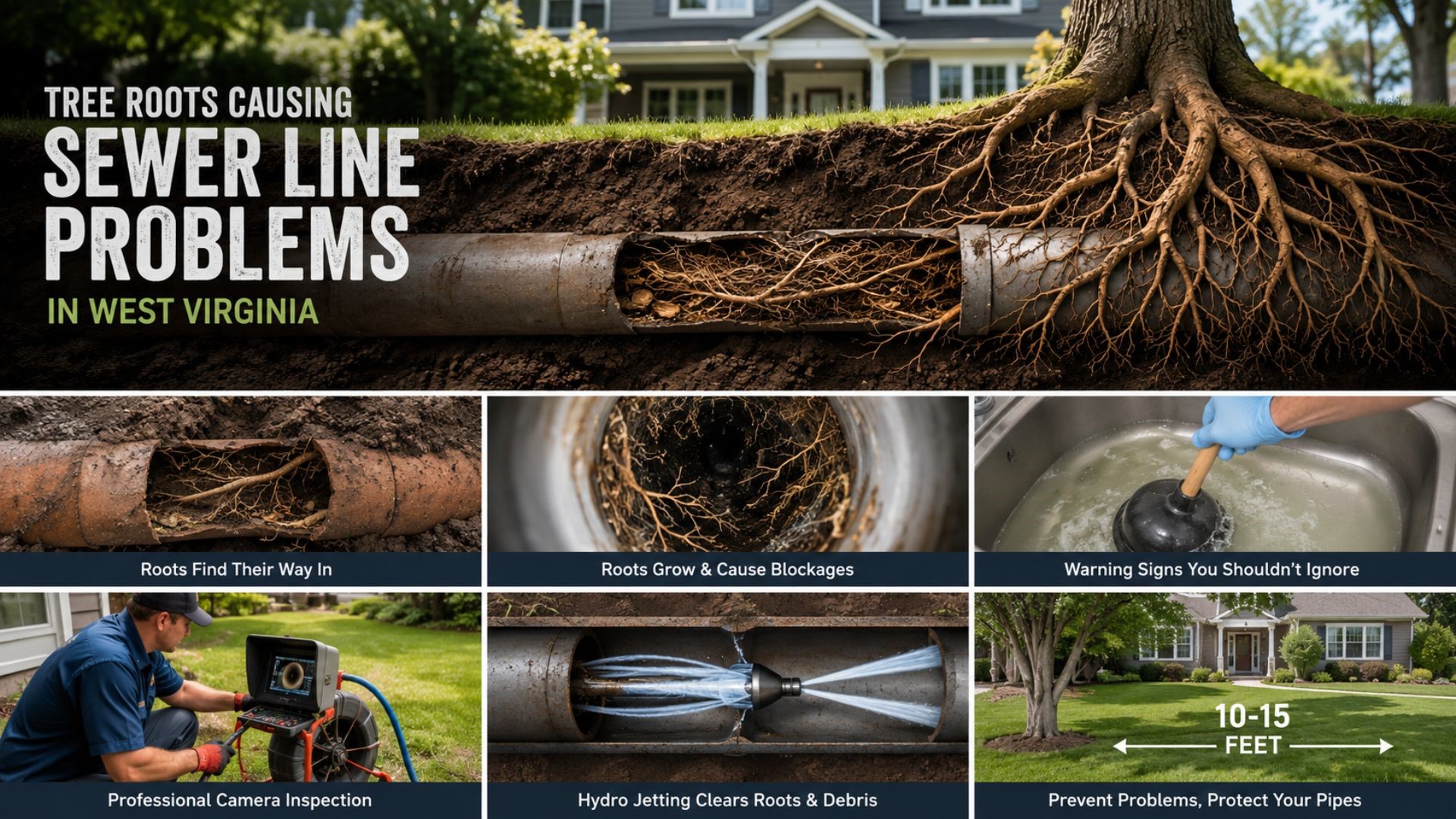
Tree roots do not need much space to grow. A tiny crack in a sewer pipe is enough. Once roots detect moisture and nutrients escaping from an underground line, they move toward the source. Over time, those thin roots become thicker, stronger, and harder to remove. Many property owners dealing with sewer line problems in West Virginia first notice slow drains or recurring clogs without realizing tree roots are the real cause.
The combination of aging sewer systems, mature trees, and changing weather makes root intrusion one of the most common plumbing concerns across the state. Understanding why it happens, what warning signs to watch for, and how to prevent expensive repairs helps protect both your plumbing system and your property.
Tree roots naturally search for water and nutrients. Sewer pipes provide both. Even when a pipe appears solid, small cracks, loose joints, or aging connections release tiny amounts of moisture into the surrounding soil.
Roots detect this moisture and begin growing toward it. Once they enter the pipe, they continue expanding until they create a blockage or break the pipe apart.
This process often starts years before homeowners notice any symptoms.
Several conditions increase the chance of sewer line problems in West Virginia.
Older neighbourhoods often contain clay or cast iron sewer pipes that have weakened over decades. These materials develop cracks, separated joints, and corrosion more easily than newer PVC systems.
West Virginia also has:
When these factors combine, sewer pipes become more vulnerable to root intrusion.
Not every tree creates the same level of risk. Some species produce aggressive root systems that spread long distances in search of moisture.
Common examples include:
Planting these trees close to underground utility lines increases the chance of future plumbing repairs.
Many homeowners assume roots break through solid pipes. In most situations, the opposite happens.
The pipe already has a weak spot.
Common entry points include:
After entering the opening, roots continue growing because wastewater provides a steady supply of moisture.
This gradual process creates some of the most expensive sewer line problems in West Virginia when left untreated.
Small warning signs often appear long before complete sewer failure.
Watch for:
Ignoring these symptoms often allows roots to spread deeper inside the pipe.
Root growth rarely stops after entering a sewer line.
The progression usually looks like this:
At this stage, homeowners usually experience severe sewer line problems in West Virginia that require professional repair.
Tree roots affect more than drainage.
Potential damage includes:
What starts as a small root intrusion often turns into a complete sewer replacement if ignored for too long.
Guesswork rarely solves underground plumbing issues.
Professional inspections rely on specialized equipment that identifies the exact location and severity of the blockage.
Common inspection methods include:
Camera inspections provide clear images inside the pipe without digging across the yard.
This approach helps identify the exact cause of sewer line problems in West Virginia before repairs begin.
The right repair depends on the amount of damage inside the sewer line.
Specialized cutting blades remove roots inside the pipe.
This restores water flow but does not permanently stop future root growth.
High pressure water removes roots, grease, sludge, and debris from the pipe walls.
Many homeowners combine hydro jetting with routine maintenance to reduce future blockages.
If only one section of pipe is damaged, replacing that portion often solves the problem.
Extensive damage sometimes requires replacing the entire sewer line.
Although this costs more upfront, it prevents repeated repairs when older pipes have reached the end of their service life.
Selecting the right repair early helps reduce long term sewer line problems in West Virginia.
Preventive maintenance costs far less than emergency sewer repairs.
Property owners should:
Regular inspections often identify developing sewer line problems in West Virginia before they become major emergencies.
Chemical drain cleaners rarely solve root intrusion.
Most products remove surface buildup without eliminating the larger roots growing deeper inside the pipe.
Store bought root killers offer temporary relief in some situations, though they do not repair cracked or separated pipes.
Repeated chemical use also risks damaging older plumbing systems.
Professional inspections identify the underlying issue instead of treating the symptoms alone.
West Virginia experiences changing weather throughout the year.
Spring rainfall saturates the soil and encourages rapid root growth. Summer heat drives roots toward underground moisture sources. Autumn brings falling leaves that contribute additional debris inside partially blocked drains. Winter freeze and thaw cycles shift the ground, creating new cracks where roots enter.
These seasonal changes explain why many homeowners notice sewer line problems in West Virginia after heavy rain or during temperature swings.
Waiting rarely reduces repair costs.
Small root intrusions often require cleaning and minor repairs. Large root systems frequently damage entire sections of pipe, leading to excavation, landscaping repairs, and sewer replacement.
Early action also reduces the chance of sewage backing into your home, which creates health concerns and expensive cleanup costs.
Addressing sewer line problems in West Virginia early protects both your plumbing system and your property’s value.
Not every plumbing issue requires the same solution.
Look for a contractor that offers:
An experienced contractor diagnoses the real cause before recommending repairs.
That approach prevents unnecessary work while resolving sewer line problems in West Virginia efficiently.
When you need dependable help with sewer line problems in West Virginia, our team at C&C Wirth Contractors is ready to respond with experience, advanced equipment, and dependable workmanship. We perform detailed sewer camera inspections to locate root intrusion, cracks, and hidden pipe damage before recommending the right repair. Our services include hydro jetting, sewer line repairs, sewer replacements, and preventive maintenance designed to keep your plumbing system operating efficiently. We focus on lasting solutions instead of temporary fixes, helping homeowners avoid repeated backups and expensive future repairs. Every project receives careful attention, honest communication, and quality workmanship because your satisfaction remains our highest priority. When sewer issues arise, you can count on us to restore your system quickly and professionally.
Tree root intrusion rarely fixes itself. Small cracks become major breaks, and minor clogs often develop into costly sewer failures. If you have noticed slow drains, recurring backups, foul odors, or other signs of sewer line problems in West Virginia, do not wait until the damage spreads. Contact C&C Wirth Contractors today to schedule a professional sewer inspection and receive reliable repair solutions that protect your home, your plumbing system, and your investment for years to come.