85 Mansion Blvd Parkersburg, WV 26101
E-mail us: [email protected]
MONDAY-FRIDAY 7AM - 4PM EMERGENSIES BASED ON AVAILABILITY

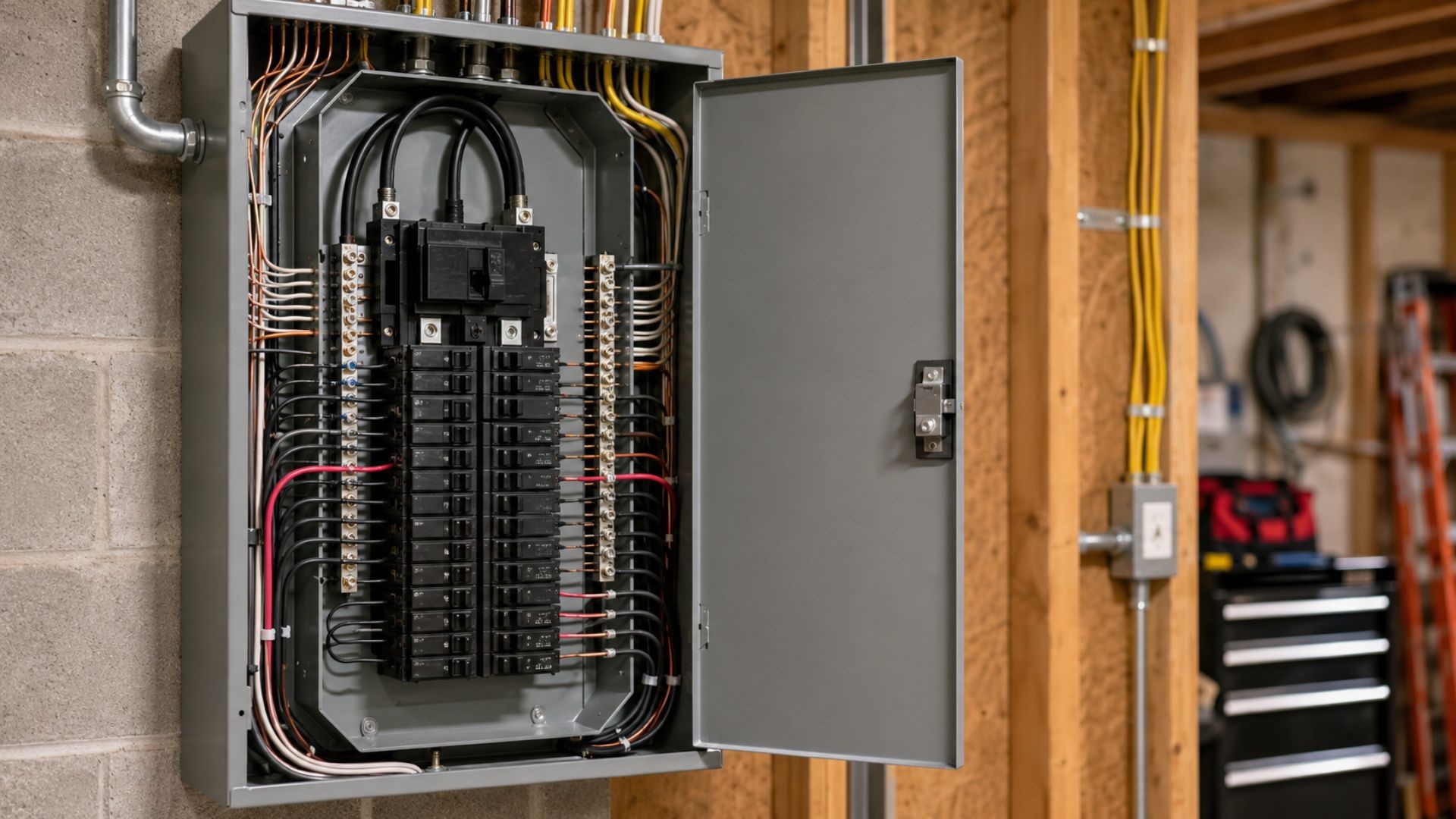
An electrical panel upgrade is not exactly top of mind for everyone, so people tend to ignore or delay it for years. Homeowners usually only notice the problems when breakers keep tripping randomly, or buy new appliances (oven, AC, EV, charger, etc), or the house feels electrically “maxed out”. Older Ohio homes were built at a time when there used to be less electricity consumption comparatively. But now… appliances, air conditioners, electric vehicle chargers, and other devices pull a lot more power, putting serious strain on old panels and the incoming service. Panels now are 200-amp, but the older homes in Ohio still have 100-amp or even 60-amp panels. These were sufficient decades ago, but they are no longer enough for today’s lifestyle.
For people living in Ohio, it is important to understand that an electrical panel isn’t just a gray metal box of switches (breakers) on your wall. It’s actually the central hub of your entire home’s electrical system. It takes power coming from the utility company and distributes it safely to every circuit in your house – lights, outlets, appliances, AC, EV charger, etc.
So how do these electrical panel upgrades work? Electrical panels are also called the breaker box or service panel; they are the main hub of your entire house’s electrical system. Its main job is to take the electricity coming from the utility company and safely divide it into different circuits throughout your house (lights, outlets, kitchen, A/C, etc.). The breakers act as safety switches, and when a circuit tries to pull too much power, the breaker trips (shuts off) to prevent overheating or fire. This tripping mechanism is the primary protection that keeps any single circuit from being overloaded. The main breaker at the top shows the total capacity of your house that is allowed to be used at one time. Common sizes are 100-amp, 10-amp,p or 200-amp.
A good way to understand an electrical panel upgrade is: you might not need more electricity from the utility company, but you probably need a better distribution system so your home can use the power it already has more safely and efficiently. So the real purpose of an electrical panel upgrade is improving how power is distributed and protected inside your house.
| Home Situation | What It Usually Points To |
| Older panel with repeated breaker trips | The panel is getting pushed too hard |
| Home adding large appliances or EV charging | Current draw may have outgrown the panel |
| Panel shows corrosion or damage | Replacement becomes more likely |
| Home still on a lower-amp service | Upgrade planning starts to make sense |
Studies on home electrification show that when people add new high-power items like electric ovens, heat pumps, air conditioners, or especially EV chargers, the amount of electricity being pulled increases significantly.
Some homeowners believe it is bad luck when a tripped breaker happens. Usually it is not. This is the system indicating that the load is crossing a line.
Common factors trigger for an electrical panel upgrade:
Smaller homes may be able to use the 100 amp service, but larger homes or homes with electric heating/central air/several modern appliances require 200 amps or more. This is not always the case for every house, but it is the usual scenario that a homeowner finds themselves in when their electrical system is put to new challenges.
If the panel is correct, the change is not purely technical. It alters how the home functions on an everyday basis.
What usually improves
The latter one’s the main thing. When the existing electrical system is already strained, an electrical panel upgrade provides a few feet of breathing room before the next appliance, remodel, or technology requirement. That extra space is key in older homes.
An electrical panel upgrade is not a casual weekend project. The service company is required to disconnect the power for replacement, and a licensed electrician needs to perform the job and have it inspected with reference to local code requirements. This is standard as the panel is directly connected to the home’s service entrance and the utility feed.
Typical job steps
The time involved is not typically the trickiest portion of the project. A replacement window can take 4 – 8 hours depending on the types of panels being replaced, and the addition of new circuits or a wider home can extend the timeline.
Before the crew arrives
The upgrade is typically also the cleanest time to organize the electrical circuits because the panel controls the entire electrical system. The panel is the place where the household’s energy is regulated, so a clearer layout now eliminates the future chaos.
For Ohio homeowners, an electrical panel upgrade is all about capacity and safety. The panel is the central hub of everything that runs on electricity and distributes power through the house. Adding popular upgrades like EV chargers or new appliances can overload the existing electrical system, potentially causing frequent breaker trips, overheating, or even safety hazards. Our homes have now changed, so our electrical panel should also be upgraded to create a safer space.
Are you looking for new electrical panel upgrades for your homes in Ohio, West Virginia, and Idaho? Contact C&C Wirth Contractors.
An electrical panel upgrade consists of installing a new or upgraded electrical panel into your home. This would help it accommodate more electrical load, have more circuits, or simply replace an old or malfunctioning electrical panel.
Some frequent reasons why people opt to upgrade their electrical panel include breaker tripping, a damaged panel, corrosion of the panel, and installing new high-energy appliances.
Indeed, they do. Modern electrical panels are frequently rated at 200 amps. For this reason, 200 is the magic number when talking about panels.
It takes around four to eight hours to perform this task; however, it may depend on how many circuits you plan to add.
Definitely not, since installing an electrical panel requires working with live wires and the use of specific equipment.
Yes. Numerous studies on residential electrification show that adding electric appliances or vehicle charging can increase the current draw.