85 Mansion Blvd Parkersburg, WV 26101
E-mail us: [email protected]
MONDAY-FRIDAY 7AM - 4PM EMERGENSIES BASED ON AVAILABILITY

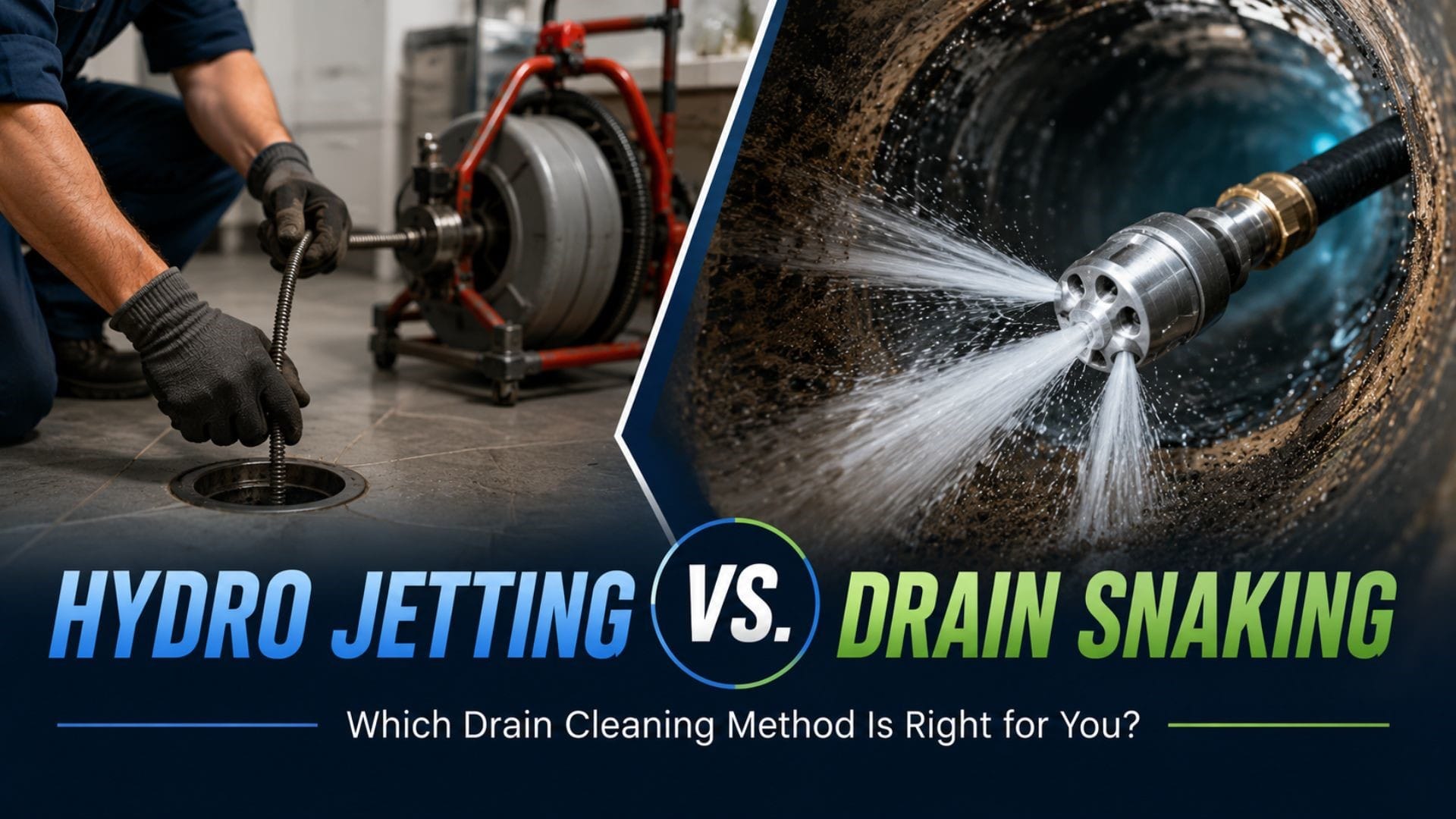
Clogged drains are among the most common plumbing problems homeowners and businesses face. From slow-moving sinks to completely blocked sewer lines, drain issues can disrupt daily life and lead to costly repairs if not addressed promptly. When it comes to clearing stubborn blockages, two of the most effective solutions are hydro jetting and drain snaking. But which method is better for your plumbing system?
Understanding the differences between these two techniques is crucial when choosing the right solution for your drain problems. In this guide, we’ll explore hydro jetting vs. drain snaking, compare their advantages and limitations, and help you determine which option best suits your needs.
Before diving into the debate of hydro jetting vs. drain snaking, it’s important to understand how each method works and what types of clogs they are designed to handle.
Drain cleaning technology has evolved significantly over the years. While traditional methods remain effective for certain situations, modern solutions offer deeper cleaning and longer-lasting results.
Drain snaking, also known as augering, is one of the oldest and most widely used plumbing techniques. It involves inserting a flexible metal cable into the drain to break up or retrieve clogs.
A plumber feeds a specialized drain snake through the pipe until it reaches the blockage. The rotating head either punctures, breaks apart, or hooks onto the clog so it can be removed.
Drain snakes come in various sizes:
This method is particularly effective for localized clogs near the drain opening.
Drain snaking is commonly used for:
When discussing hydro jetting vs. drain snaking, snaking is often considered the first line of defense for simple clogs.
Drain snaking offers several benefits that make it a popular choice.
Snaking is generally less expensive than hydro jetting because it requires less equipment and labor.
Most drain snaking jobs can be completed quickly, making it ideal for emergencies.
Localized blockages are often resolved efficiently using a drain snake.
Unlike hydro jetting, snaking does not rely on high-pressure water.
Although effective in many situations, drain snaking has some drawbacks.
A drain snake often punches a hole through the clog instead of completely removing it.
Grease, sludge, and mineral deposits may remain attached to pipe walls.
Because debris often remains, clogs can return over time.
When evaluating hydro jetting vs. drain snaking, these limitations become an important factor in choosing long-term solutions.
Hydro jetting is an advanced drain cleaning method that uses highly pressurized water to clean pipes thoroughly.
A specialized hose with a nozzle is inserted into the plumbing system. Water is then blasted through the pipe at pressures ranging from 3,000 to 8,000 PSI.
The high-pressure water:
This comprehensive cleaning process sets hydro jetting apart in the hydro jetting vs. drain snaking debate.
Hydro jetting is highly effective against:
Its versatility makes it a preferred solution for residential and commercial plumbing systems.
Hydro jetting offers numerous benefits that contribute to its growing popularity.
Unlike snaking, hydro jetting removes buildup from the entire pipe interior.
By eliminating residue, hydro jetting reduces the chances of recurring clogs.
Hydro jetting uses water instead of harsh chemicals.
Severe clogs that resist traditional methods can often be cleared using hydro jetting.
In discussions about hydro jetting vs. drain snaking, hydro jetting often stands out for its comprehensive cleaning ability.
Despite its effectiveness, hydro jetting isn’t always the best solution.
Hydro jetting generally costs more than drain snaking.
Older or weakened pipes may not withstand high-pressure water.
Plumbers often perform a camera inspection before hydro jetting to assess pipe condition.
These factors should be considered when comparing hydro jetting vs. drain snaking.
Let’s examine the major distinctions between these two methods.
When comparing hydro jetting vs. drain snaking, hydro jetting provides a deeper clean because it removes debris from pipe walls rather than merely puncturing clogs.
Cost often influences decision-making in the hydro jetting vs. drain snaking discussion.
While hydro jetting may cost more initially, it can reduce future plumbing expenses.
One of the biggest factors in hydro jetting vs. drain snaking is long-term effectiveness.
Drain snaking provides temporary relief for many clogs, whereas hydro jetting offers more durable results by thoroughly cleaning the system.
Hydro jetting is considered more environmentally friendly because it uses water rather than chemical drain cleaners.
In the hydro jetting vs. drain snaking comparison, hydro jetting often wins for sustainability.
Pipe condition matters greatly.
Drain snaking is generally safer for older plumbing systems. Hydro jetting may not be appropriate for fragile pipes without prior inspection.
This is a critical consideration in the hydro jetting vs. drain snaking decision-making process.
For homeowners, the choice depends on the severity and frequency of clogs.
When considering hydro jetting vs. drain snaking, homeowners should evaluate both immediate and long-term needs.
Commercial properties often experience heavier drain usage.
Restaurants, apartment complexes, and office buildings benefit significantly from hydro jetting because it handles grease and heavy debris effectively.
In commercial settings, hydro jetting vs. drain snaking often favors hydro jetting for preventive maintenance.
Drain snaking may be the ideal solution if:
Understanding when to use snaking helps clarify the hydro jetting vs. drain snaking comparison.
Hydro jetting may be preferable if:
Many property owners choose hydro jetting for its thorough cleaning capabilities in the hydro jetting vs. drain snaking debate.
Modern plumbing often includes video camera inspections.
A camera inspection allows plumbers to:
Using inspections improves decision-making in hydro jetting vs. drain snaking scenarios.
Regardless of which method you choose, prevention remains essential.
Preventive maintenance can reduce the need for either hydro jetting or drain snaking services.
Chemical cleaners can damage pipes and often fail to address the root cause.
Hydro jetting is safe for most healthy plumbing systems when performed by professionals.
Snaking often provides temporary relief rather than complete cleaning.
These misconceptions frequently arise in discussions about hydro jetting vs. drain snaking.
When evaluating hydro jetting vs. drain snaking, there is no one-size-fits-all answer. Drain snaking remains an effective and affordable option for simple, isolated clogs. However, hydro jetting provides superior cleaning, longer-lasting results, and better preventive maintenance for severe or recurring drain issues.
Ultimately, the right choice depends on the condition of your plumbing system, the type of blockage, and your long-term maintenance goals. Consulting an experienced plumbing professional can help determine the best approach for your specific situation.
At C&C Wirth Contractors, we understand that plumbing issues require fast, reliable, and effective solutions. Whether you need drain snaking for a minor clog or hydro jetting for a stubborn blockage, our experienced team delivers professional plumbing services throughout West Virginia. We use advanced equipment and proven techniques to restore your plumbing system efficiently while prioritizing long-term performance. Our commitment to quality workmanship, exceptional customer service, and dependable results has made us a trusted name in the industry. When you need expert plumbing solutions, our team is ready to help keep your drains flowing smoothly year-round.
Contact us today to schedule your professional drain cleaning service and discover the difference expert plumbing care can make!
Ans: Hydro jetting offers a more thorough cleaning and longer-lasting results, while drain snaking is effective for minor clogs and quick repairs.
Ans: Yes. Hydro jetting can effectively break apart and flush out small tree roots invading sewer lines.
Ans: For preventive maintenance, many homeowners schedule hydro jetting every 1–2 years, depending on usage and pipe condition.
Ans: Drain snaking is generally safe for most plumbing systems, but improper use can sometimes damage pipes.
Ans: No. Hydro jetting relies solely on high-pressure water, making it an environmentally friendly drain-cleaning solution.