Parkersburg W.V. 26101
E-mail us: [email protected]
MONDAY-FRIDAY 7AM - 4PM EMERGENSIES BASED ON AVAILABILITY

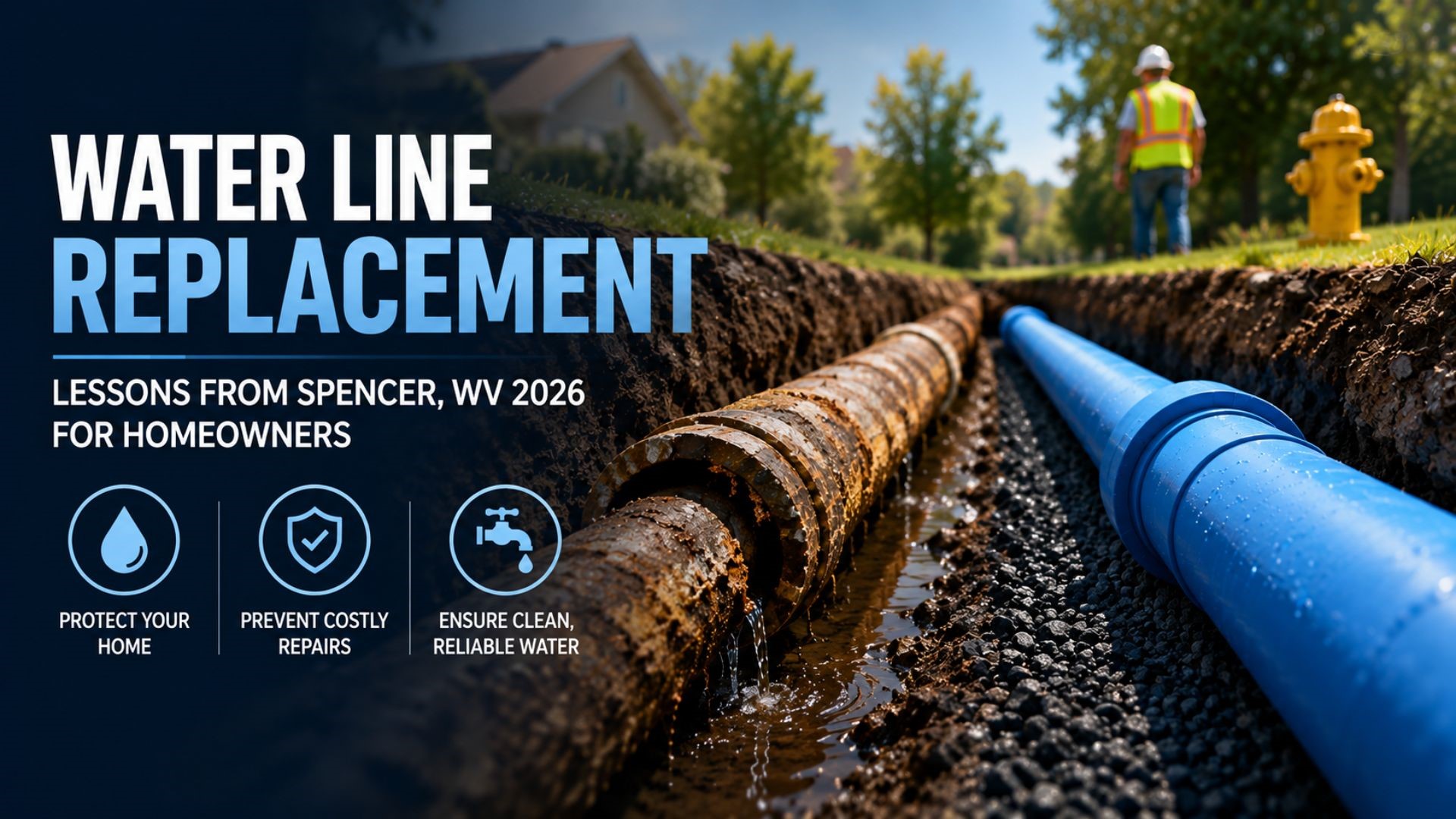
When most people think about water line replacement, they imagine a major construction project that’s only necessary after a pipe bursts. In reality, replacing aging water lines is one of the smartest investments a community or a homeowner can make before serious problems occur. Old underground pipes gradually deteriorate over decades, leading to water quality concerns, leaks, reduced water pressure, and costly emergency repairs. That’s exactly why communities across West Virginia are investing in proactive infrastructure improvements instead of waiting for failures to happen.
A perfect example is the City of Spencer, West Virginia, which launched a significant water infrastructure initiative in 2026 to modernize aging water lines serving local neighborhoods. While this project focuses on public infrastructure, it also offers valuable lessons for homeowners throughout Spencer and the surrounding region. Just as municipalities must eventually replace aging utility systems, homeowners should understand the condition of the water lines that serve their own properties.
Whether your home is decades old or relatively new, knowing when to replace water line becomes necessary can help you avoid unexpected repairs, protect your investment, and ensure a reliable supply of clean water for years to come.
In May 2026, the City of Spencer announced a $1.4 million water infrastructure improvement project focused on the Schoolhouse Hill neighborhood. The project includes replacing approximately 3,100 feet of aging water lines, many of which have been in service for 60 to 70 years, providing water to nearly 100 homes.
According to city officials, much of the existing infrastructure had reached the end of its expected service life. Although these water lines continued to function, aging underground pipes became increasingly vulnerable to corrosion, leaks, pressure loss, and unexpected failures. Rather than waiting for emergency repairs, the city chose a proactive approach by replacing the aging system before larger problems developed.
One of the most encouraging aspects of the project is that grant funding covered a significant portion of the costs, allowing the city to move forward without increasing water rates for residents. Construction was expected to begin during the summer of 2026 and conclude by the end of the year.
The Schoolhouse Hill project is also part of a broader, long-term strategy. Spencer has spent years identifying aging infrastructure throughout the community and systematically replacing outdated water lines to improve reliability, strengthen public infrastructure, and enhance overall water quality for residents.
For homeowners, this project highlights an important reality: water infrastructure doesn’t last forever. Whether the pipes belong to the municipality or extend from the street to your home, every plumbing system has a lifespan that eventually requires attention.
Water pipes spend their entire lives underground, exposed to changing soil conditions, moisture, temperature fluctuations, shifting ground, and decades of continuous use. Even the highest-quality materials gradually deteriorate over time.
Many older communities, including portions of Spencer, still rely on water lines installed several decades ago. While these systems were built to last, no plumbing material is permanent. As underground pipes age, several issues can begin to develop.
Corrosion
Metal water lines naturally corrode over time. Internal corrosion can reduce water flow, affect water quality, and eventually weaken the pipe to the point of causing leaks or breaks.
Water Leaks
Small underground leaks often remain unnoticed for months because they’re hidden beneath soil or pavement. Over time, these leaks waste water, increase utility costs, and may undermine nearby landscaping, driveways, or even building foundations.
Reduced Water Pressure
Mineral deposits, corrosion, and partially deteriorated pipes gradually restrict water flow. Homeowners may notice weaker pressure at faucets, showers, or outdoor hose connections.
Frequent Repairs
Older water lines often require repeated maintenance. While individual repairs may temporarily solve a problem, continually fixing aging pipes can become more expensive than replacing them altogether.
Water Quality Concerns
As pipes deteriorate, rust, sediment, and other contaminants may affect the clarity, taste, or color of household water. Although municipal treatment ensures water leaves the treatment facility safely, aging distribution lines can still contribute to quality concerns before the water reaches your home.
Unexpected Pipe Failures
Perhaps the biggest concern is unpredictability. A pipe that appears to function normally one day can suddenly rupture the next, causing service interruptions, flooding, property damage, and expensive emergency repairs.
The City of Spencer’s decision to invest in water line replacement before widespread failures occur demonstrates the value of preventive infrastructure planning, a lesson that’s equally relevant for individual homeowners.
While municipalities are responsible for public water mains, homeowners are typically responsible for the service line connecting their home to the municipal supply. Knowing the warning signs of a failing water line can help you act before a minor issue turns into a costly emergency.
Some of the most common indicators include:
These warning signs don’t always mean a complete replacement of the water line is immediately necessary, but they do indicate that your plumbing system should be professionally evaluated.
For many homeowners, replacing a water line sounds like a project they’d rather postpone. However, as Spencer’s 2026 infrastructure initiative demonstrates, replacing aging water lines before they fail offers significant long-term advantages.
Improved Water Quality
Old pipes can accumulate rust, mineral deposits, and corrosion that may affect the appearance, taste, and overall quality of your water. New water lines provide a cleaner pathway from the municipal supply to your home, helping deliver fresher, more reliable water.
Better Water Pressure
One of the first improvements homeowners often notice after a water line replacement is stronger, more consistent water pressure. Replacing deteriorated pipes eliminates restrictions caused by corrosion or buildup, allowing water to flow more efficiently throughout the home.
Fewer Plumbing Emergencies
Unexpected water line failures can lead to flooded yards, damaged landscaping, interrupted water service, and costly emergency repairs. Replacing an aging line before it fails significantly reduces the risk of these disruptive and expensive situations.
Lower Long-Term Maintenance Costs
Repeatedly repairing an old water line can quickly become more expensive than investing in a replacement. A new system minimizes ongoing maintenance expenses and provides greater peace of mind for years to come.
Greater Reliability
Modern water lines are built using durable materials designed to withstand changing soil conditions, temperature fluctuations, and everyday use. Homeowners benefit from a plumbing system that performs more consistently and requires fewer unexpected repairs.
Increased Property Value
Infrastructure improvements aren’t just practical; they can also make a home more attractive to future buyers. A recently replaced water line demonstrates that the property has been well maintained, reducing concerns about hidden plumbing issues during a home inspection.
The City of Spencer’s proactive investment reflects the same principle homeowners can apply to their own properties: addressing aging infrastructure before it fails is often the most cost-effective decision in the long run.
If your home is showing signs of an aging water line, working with an experienced contractor is just as important as choosing the right materials. Proper planning, accurate diagnosis, and quality workmanship ensure your investment delivers reliable performance for decades, not just a temporary fix.
For homeowners throughout West Virginia, C&C Wirth Contractors has built a reputation for delivering dependable plumbing and remodeling solutions backed by skilled craftsmanship and outstanding customer service. Whether you need a professional evaluation, a complete water line replacement, or broader home improvement services, their team focuses on providing practical solutions tailored to your property’s needs.
Homeowners choose C&C Wirth Contractors because they are committed to:
Just as Spencer is investing in stronger infrastructure for the future, homeowners can protect their own properties by partnering with professionals who value quality, reliability, and long-term performance. With the right contractor and a proactive approach, your plumbing system can continue serving your family safely and efficiently for many years to come.
Q-1. How long do residential water lines typically last?
Ans. The lifespan of a residential water line depends on the material, soil conditions, water quality, and maintenance history. Many older water lines can last 50 years or more, but they should be inspected as they age to identify signs of deterioration before failure occurs.
Q-2. What are the signs that a water line may need replacement?
Ans. Common warning signs include low water pressure, recurring leaks, discolored water, unusually high water bills, wet areas in the yard, reduced water flow, and frequent plumbing repairs. A professional inspection can determine whether repairs or a complete water line replacement is the best solution.
Q-3. Does low water pressure always mean I need a water line replacement?
Ans. Not necessarily. Low water pressure can result from clogged fixtures, pressure regulator issues, leaks, or aging water lines. A professional plumbing inspection can identify the exact cause before any major work is recommended.
Q-4. Is replacing a water line worth the investment?
Ans. Yes. Although replacing a water line requires an upfront investment, it can improve water quality, increase water pressure, reduce future repair costs, and help prevent expensive plumbing emergencies that may cause property damage.
Q-5. Can homeowners replace their own water line?
Ans. Because water line replacement often involves excavation, permits, utility coordination, and compliance with local plumbing codes, it is generally best handled by experienced professionals. Proper installation helps ensure long-term reliability, safety, and compliance with applicable regulations.