Parkersburg W.V. 26101
E-mail us: [email protected]
MONDAY-FRIDAY 7AM - 4PM EMERGENSIES BASED ON AVAILABILITY

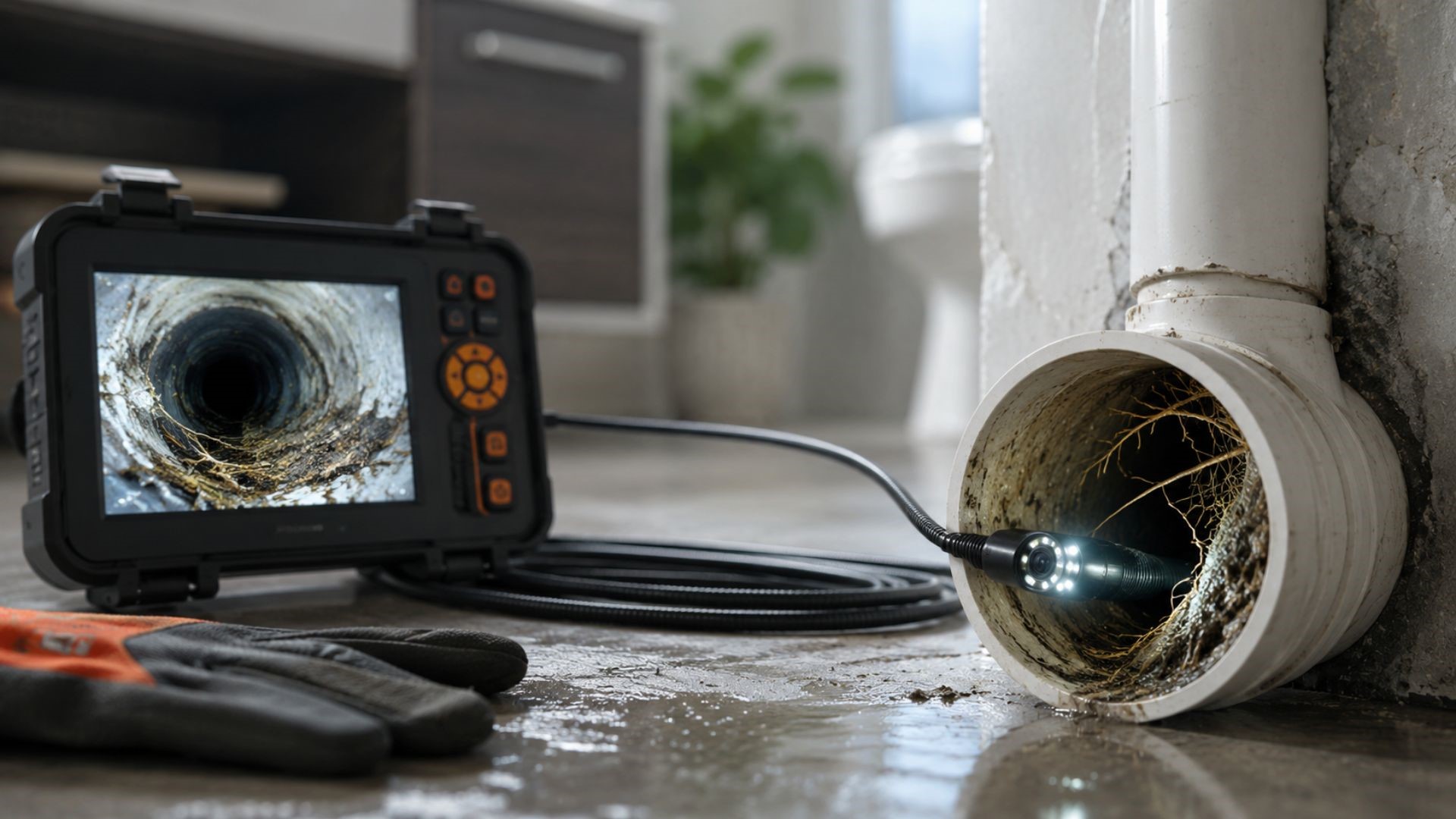
What drain cameras find often surprises homeowners. That slow-draining kitchen sink you keep ignoring? The toilet that clogs a little too often? The unpleasant odor coming from your basement drain? These aren’t just everyday plumbing annoyances; they can be early warning signs of hidden problems lurking deep inside your pipes. The trouble is, most of these issues remain completely invisible until they escalate into a costly repair or a full-blown plumbing emergency.
Thanks to modern drain camera technology, a specialized waterproof camera travels through your plumbing system, providing a real-time view of your pipes and revealing everything from stubborn blockages and invasive tree roots to cracked sewer lines, pipe bellies, corrosion, and even poorly executed past repairs. This non-invasive inspection method eliminates unnecessary digging while allowing plumbers to diagnose problems with remarkable accuracy.
In this guide, we’ll uncover the most common issues revealed during drain inspections, explain why they occur, and show how early detection can save you thousands of dollars while protecting your home’s plumbing system for years to come.
A drain camera inspection is a non-invasive plumbing diagnostic method that uses a waterproof, high-resolution camera attached to a flexible cable. The camera is carefully inserted into the drain or sewer line, transmitting live video footage to a monitor that allows plumbers to inspect the inside of your pipes in real time.
Unlike traditional inspection methods that often relied on symptoms or trial-and-error, drain cameras provide a clear view of the pipe’s interior. This technology helps identify the exact location, severity, and cause of plumbing problems without unnecessary excavation.
A professional drain camera inspection can reveal:
Because the diagnosis is visual rather than speculative, homeowners receive more accurate repair recommendations and avoid paying for unnecessary work.
Understanding what drain cameras find isn’t just interesting; it’s one of the smartest ways to protect your home’s plumbing system. Most drain and sewer line problems don’t happen overnight. They develop gradually over months or even years, often showing only subtle warning signs before turning into major plumbing emergencies. A small crack can eventually collapse, minor tree root intrusion can grow into a complete blockage, and a partially clogged pipe can suddenly cause a messy sewage backup after heavy rainfall or increased household water usage.
Drain camera inspections help detect these issues early, allowing homeowners to address problems before they escalate into expensive repairs.
Some of the biggest benefits include:
For homeowners purchasing an older property, a drain inspection can also uncover hidden defects that may not appear during a standard home inspection.
One of the biggest advantages of knowing what drain cameras find is the ability to detect hidden plumbing problems before they become costly repairs. Using real-time video footage, plumbers can accurately identify common drain inspection problems such as blockages, tree root intrusion, cracked pipes, corrosion, and improper installations. Early detection helps prevent emergency plumbing failures, reduces repair costs, and keeps your plumbing system operating efficiently for years to come.
Clogs remain the number one issue uncovered during drain inspections. Over time, everyday materials gradually accumulate inside pipes, restricting water flow and increasing the likelihood of complete blockages.
Common causes include:
While chemical drain cleaners may temporarily improve drainage, they rarely eliminate the underlying obstruction. A camera inspection identifies both the blockage and its precise location, allowing plumbers to recommend the most effective cleaning method.
Tree roots naturally seek moisture. Even the smallest crack or loose pipe joint can attract nearby roots, which slowly grow inside the pipe while searching for water. Once inside, roots continue expanding, eventually causing:
Tree root intrusion is especially common in older sewer systems that use clay or aging pipe materials. Because roots continue growing over time, early detection can prevent much larger and far more expensive repairs later.
Pipes don’t last forever. Age, shifting soil, heavy vehicle traffic, nearby construction, freezing temperatures, and corrosion can all contribute to pipe damage. Drain cameras frequently uncover:
These defects often begin as small problems before gradually worsening.
Identifying structural damage early allows homeowners to repair isolated sections before an entire sewer line requires replacement.
One of the lesser-known issues drain cameras find is a pipe belly, sometimes called a “sag.” This occurs when a section of the underground pipe sinks due to shifting soil, poor installation, or ground settlement. Instead of maintaining a steady slope, the pipe develops a low spot where wastewater collects.
Although water may still flow, standing water allows debris to settle, eventually leading to recurring clogs and slow drainage. Common signs of a pipe belly include:
Because the problem lies in the pipe’s structure rather than a simple blockage, repeated drain cleaning won’t provide a permanent solution. A camera inspection clearly identifies the location and severity of the sag, helping homeowners determine the most effective repair strategy.
Many older homes still rely on aging plumbing systems constructed from cast iron, galvanized steel, clay, or older plastic materials. Over time, these pipes naturally deteriorate due to corrosion, mineral buildup, shifting soil, and decades of everyday use.
During inspections, plumbers commonly discover:
These issues often develop gradually, meaning homeowners may not notice symptoms until significant damage has already occurred.
A drain camera inspection allows plumbing professionals to assess the overall condition of older pipes and determine whether cleaning, spot repairs, or complete replacement offers the best long-term solution.
Not every plumbing problem is caused by age. Some are the result of previous repairs that were never completed correctly. What drain cameras find are:
While these fixes may have solved an immediate problem, they often create new issues that eventually lead to leaks, backups, or recurring blockages.
Because drain cameras provide a complete view of the plumbing system, professionals can identify these hidden defects and recommend permanent solutions instead of temporary patches.
Many homeowners wait until a plumbing emergency occurs before calling a professional. Unfortunately, by that point, the damage is often much more extensive, and much more expensive.
However, what a drain camera finds can eventually help you identify problems before they escalate into:
Addressing a small crack or localized blockage today is almost always less expensive than replacing a collapsed sewer line or repairing water-damaged flooring tomorrow. Routine inspections also help homeowners plan future plumbing upgrades instead of being forced into urgent, unplanned repairs.
While what drain cameras find is invaluable for diagnosing existing plumbing problems, they’re also an excellent preventive maintenance tool. Consider scheduling an inspection if you notice:
Drain inspections are also highly recommended:
Identifying hidden issues early provides peace of mind and helps prevent unexpected plumbing emergencies.
Understanding what drain cameras find gives homeowners a valuable advantage when it comes to protecting their plumbing systems. From stubborn clogs and invasive tree roots to cracked pipes, corrosion, pipe bellies, and hidden installation defects, modern drain camera inspections remove the guesswork from plumbing diagnostics.
Rather than relying on repeated drain cleaning or temporary fixes, homeowners can make informed decisions based on clear visual evidence of their plumbing system’s condition. Early detection not only reduces repair costs but also helps prevent property damage, sewer backups, and unnecessary excavation.
Whether you’re experiencing recurring drainage issues, maintaining an older home, or preparing for a renovation, a professional drain camera inspection is one of the most effective ways to identify hidden problems before they become major expenses. Investing in preventive diagnostics today can save significant time, money, and stress in the future.
Q-1. What can a drain camera inspection detect?
Ans. A drain camera inspection can identify blockages, tree root intrusion, cracked or collapsed pipes, corrosion, pipe bellies, misaligned joints, foreign objects, and other hidden plumbing defects that aren’t visible from the surface.
Q-2. Are drain camera inspections accurate?
Ans. Yes. Modern drain cameras provide real-time, high-resolution video footage of the inside of your pipes, allowing plumbing professionals to accurately diagnose problems without unnecessary digging or guesswork.
Q-3. How often should drains be inspected?
Ans. For most homes, a drain inspection every few years is sufficient. However, older homes, properties with mature trees, or homes experiencing recurring plumbing issues may benefit from more frequent inspections.
Q-4. Can a drain camera inspection prevent expensive plumbing repairs?
Ans. Absolutely. Early detection of small cracks, root intrusion, or developing blockages allows homeowners to address problems before they lead to sewer backups, pipe failures, or costly emergency repairs.
Q-5. Is a drain camera inspection worth it before buying a home?
Ans. Absolutely. Knowing what drain cameras find before purchasing a home can save you from unexpected and costly plumbing repairs. A drain camera inspection can reveal hidden sewer line issues such as tree root intrusion, cracked pipes, corrosion, or blockages that are often missed during a standard home inspection, giving buyers greater confidence before finalizing their investment.