Parkersburg W.V. 26101
E-mail us: [email protected]
MONDAY-FRIDAY 7AM - 4PM EMERGENSIES BASED ON AVAILABILITY

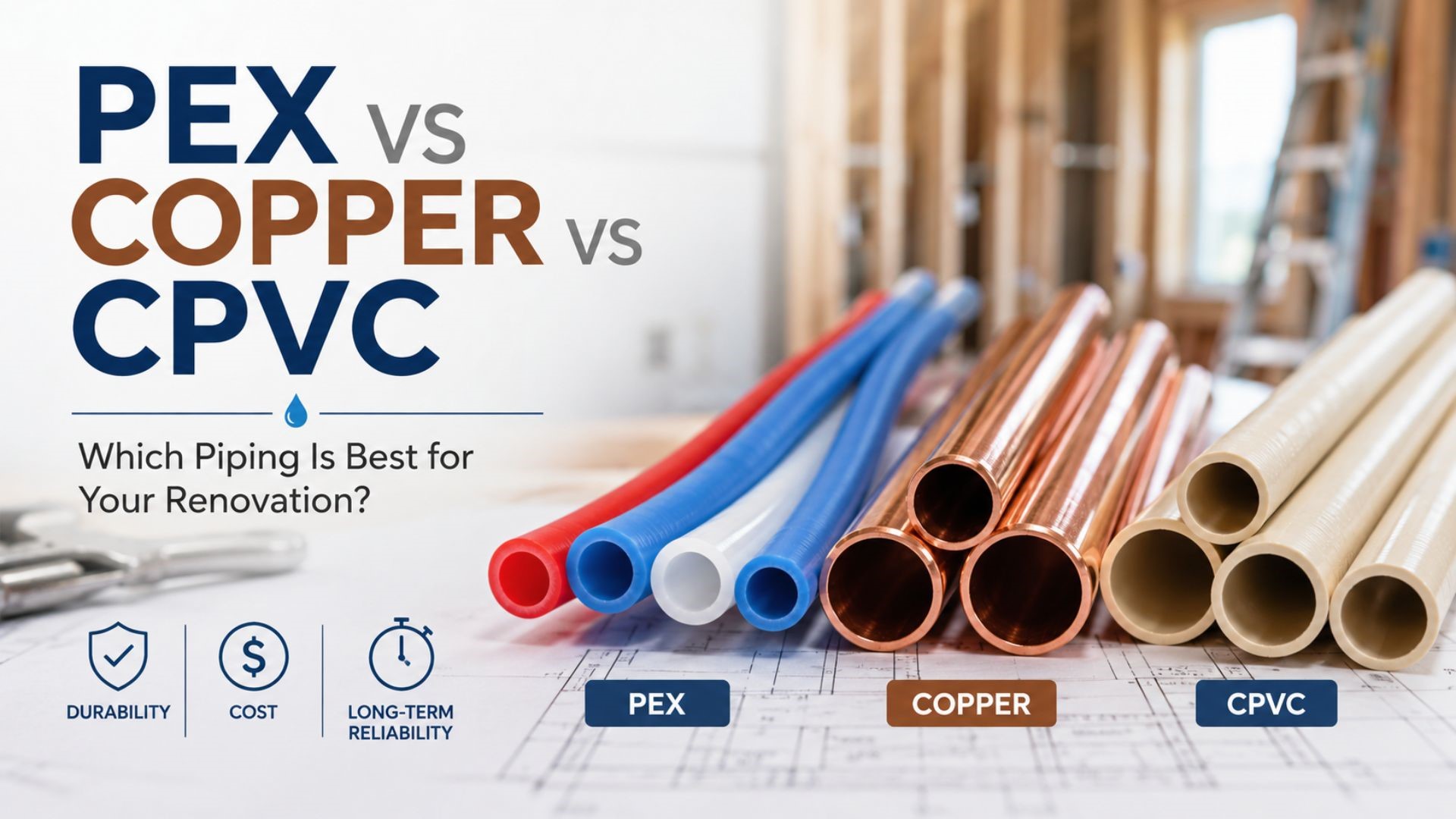
Whether you’re remodeling a kitchen, upgrading a bathroom, or replacing aging plumbing, one decision can have a lasting impact on your home’s performance: PEX vs copper vs CPVC. While pipes remain hidden behind walls and beneath floors, they play a critical role in your plumbing system’s efficiency, reliability, and lifespan. Choosing the wrong material could lead to higher installation costs, increased maintenance, or future repairs, while the right choice can improve water flow, enhance durability, and provide long-term peace of mind.
Today’s homeowners have more options than ever before. PEX has gained popularity for its flexibility and quick installation; copper remains the trusted standard for durability and performance, and CPVC offers a budget-friendly alternative for many residential projects. But there isn’t a universal winner. The best piping for renovation depends on several factors, including your budget, the age of your home, local plumbing codes, climate conditions, and the scope of your remodeling project.
In this guide, we’ll provide a practical plumbing pipe comparison to help you understand the strengths and limitations of each material, making it easier to choose the right piping solution for your renovation.
PEX is one of the most widely used residential plumbing pipe materials in modern construction and renovation. Made from flexible plastic tubing, it can bend around corners without requiring numerous fittings, making installation faster and more efficient.
Because fewer connections are needed, there’s also less potential for leaks. PEX is commonly used for both hot and cold water supply lines and is especially popular in remodeling projects where existing walls remain in place. Its flexibility often reduces labor costs and minimizes disruption during installation.
Copper has been a trusted plumbing material for decades and continues to be valued for its durability and long service life. It performs exceptionally well under high temperatures and pressure, making it suitable for a wide range of residential applications.
Many homeowners appreciate copper’s proven track record, and some local building codes or insurance providers may still recommend or require it in specific situations. Although installation typically requires soldering and specialized skills, copper remains a premium choice for long-term reliability.
CPVC is a rigid plastic piping material designed for both hot and cold potable water systems. It is generally more affordable than copper and easier to install because the joints are connected using solvent cement rather than soldering.
For homeowners seeking a cost-effective plumbing solution, CPVC can be an attractive option. However, because it is less flexible than PEX and may become brittle with age or prolonged exposure to extreme temperatures, it’s important to evaluate whether it’s the right fit for your home’s environment and renovation goals.
Choosing between PEX vs copper vs CPVC becomes much easier when you compare their key characteristics side by side.
| Feature | PEX | Copper | CVPC |
| Material Cost | Moderate | Highest | Lowest |
| Installation Cost | Low | High | Low to Moderate |
| Durability | Excellent | Excellent | Good |
| Installation Difficulty | Easy | Advanced | Moderate |
| Temperature Resistance | Very Good | Excellent | Good |
| Freeze Resistance | Excellent | Poor | Fair |
| Flexibility | Excellent | None | Limited |
| Expected Lifespan | 40-50+ years | 50+ years | 30-40 years |
| Best Use Case | Whole-home renovations and retrofits | Premium installations and long-term durability | Budget-conscious remodeling |
While this table provides a quick overview, the decision shouldn’t be based on one feature alone. The ideal choice depends on your renovation priorities.
If you’re looking for faster installation with minimal wall demolition, PEX often stands out. If longevity and proven performance matter most, copper remains a strong contender. For homeowners working within a tighter budget, CPVC can provide dependable performance when installed under the right conditions.
Over the past two decades, PEX has become one of the most widely used residential plumbing pipe materials for both new construction and remodeling projects. Its flexibility, ease of installation, and reliable performance make it a preferred choice for many homeowners and plumbing professionals.
Key Advantages of PEX
Limitations of PEX
Despite the growing popularity of modern piping materials, copper remains one of the most trusted options in residential plumbing. Its exceptional durability and long-standing reputation make it a preferred choice for homeowners who value reliability and long-term performance.
Key Advantages of Copper
Limitations of Copper
Although CPVC is often overshadowed by PEX and copper, it remains a reliable and cost-effective option for many residential plumbing projects. For homeowners looking to balance performance with affordability, CPVC continues to be a practical choice, especially for straightforward remodeling projects.
Key Advantages of CPVC
Limitations of CPVC
After comparing the features of each material, it’s clear there isn’t a universal winner in the PEX vs copper vs CPVC debate. Each option offers distinct advantages, and the right choice depends on your home’s needs, your renovation goals, and your budget.
If affordability is your top priority, CPVC remains a practical choice. It costs less than copper, is relatively easy to install, and performs well for many residential water supply applications. For homeowners replacing sections of plumbing or completing smaller remodeling projects, CPVC can provide dependable performance without significantly increasing project costs.
PEX has become the preferred option for many remodeling professionals because it’s flexible, efficient to install, and adaptable to a wide range of home layouts. It often requires fewer fittings, which can reduce both labor time and potential leak points.
For whole-home repiping, bathroom remodels, kitchen renovations, or projects where minimizing wall demolition is important, PEX is frequently the most practical solution.
Copper continues to be the benchmark for homeowners who prioritize durability and proven long-term reliability. While the upfront investment is higher, many people choose copper because of its exceptional lifespan, heat resistance, and established reputation.
Certain municipalities or specific renovation projects may also favor copper due to local plumbing codes or project requirements.
Ultimately, the best piping for renovation isn’t determined by a single material; it’s determined by selecting the material that best fits your home’s construction, climate, plumbing system, and long-term expectations.
1. Choosing Based Only on Material Cost
The least expensive pipe isn’t always the most economical choice over time. Installation costs, maintenance requirements, durability, and future repairs all contribute to the overall value of your investment.
2. Ignoring Local Plumbing Codes
Building codes vary by location, and some jurisdictions have specific requirements regarding approved piping materials. Always verify local regulations before making a decision.
3. Overlooking Climate Conditions
Homes in regions with freezing temperatures benefit from plumbing materials that perform well under cold-weather conditions. Climate should always be part of the decision-making process.
4. Skipping a Professional Plumbing Assessment
Every home is different. Water quality, existing plumbing infrastructure, renovation scope, and system compatibility all influence which material is the best fit.
The decision between PEX vs copper vs CPVC ultimately comes down to balancing performance, budget, installation requirements, and long-term goals.
If you’re looking for flexibility, quicker installation, and excellent value, PEX is often the leading choice for modern renovations. If long-term durability and proven performance are your priorities, copper continues to set the industry standard. And if you’re planning a cost-conscious renovation with straightforward plumbing needs, CPVC remains a dependable option.
Rather than asking which material is universally “best,” ask which one is best for your home. Factors such as your home’s age, local climate, plumbing layout, renovation scope, and building codes should all influence the decision.
By understanding the strengths and limitations of each material, homeowners can make informed choices that improve reliability, efficiency, and peace of mind for decades to come.
Q-1. Is PEX better than copper?
Ans. Not necessarily. PEX is generally more flexible, faster to install, and often less expensive, making it an excellent choice for many remodeling projects. Copper, however, offers exceptional durability, heat resistance, and a long-established reputation for reliability. The better option depends on your home’s needs and renovation goals.
Q-2. Is CPVC still a good choice for residential plumbing?
Ans. Yes. CPVC remains a reliable option for many residential plumbing systems, particularly when budget is a major consideration. While it may not offer the flexibility of PEX or the longevity of copper, it performs well when properly installed and maintained.
Q-3. Which plumbing pipe lasts the longest?
Ans. Copper typically has the longest service life and can last 50 years or more under the right conditions. PEX also offers an impressive lifespan, often 40 to 50 years or longer, while CPVC generally provides reliable performance for several decades when installed correctly.
Q-4. Which piping material is best for cold climates?
Ans. PEX is often considered the best option for colder climates because its flexible construction allows it to expand if water freezes inside the pipe, reducing the likelihood of cracking. Regardless of the material, proper insulation and freeze protection remain essential.
Q-5. Can I mix PEX, copper, and CPVC in the same renovation?
Ans. Yes. In many remodeling projects, different piping materials can be connected using approved transition fittings and proper installation techniques. A licensed plumbing professional can recommend the safest and most effective combination based on your home’s existing plumbing system and applicable building codes.